
Is VA health care any good?
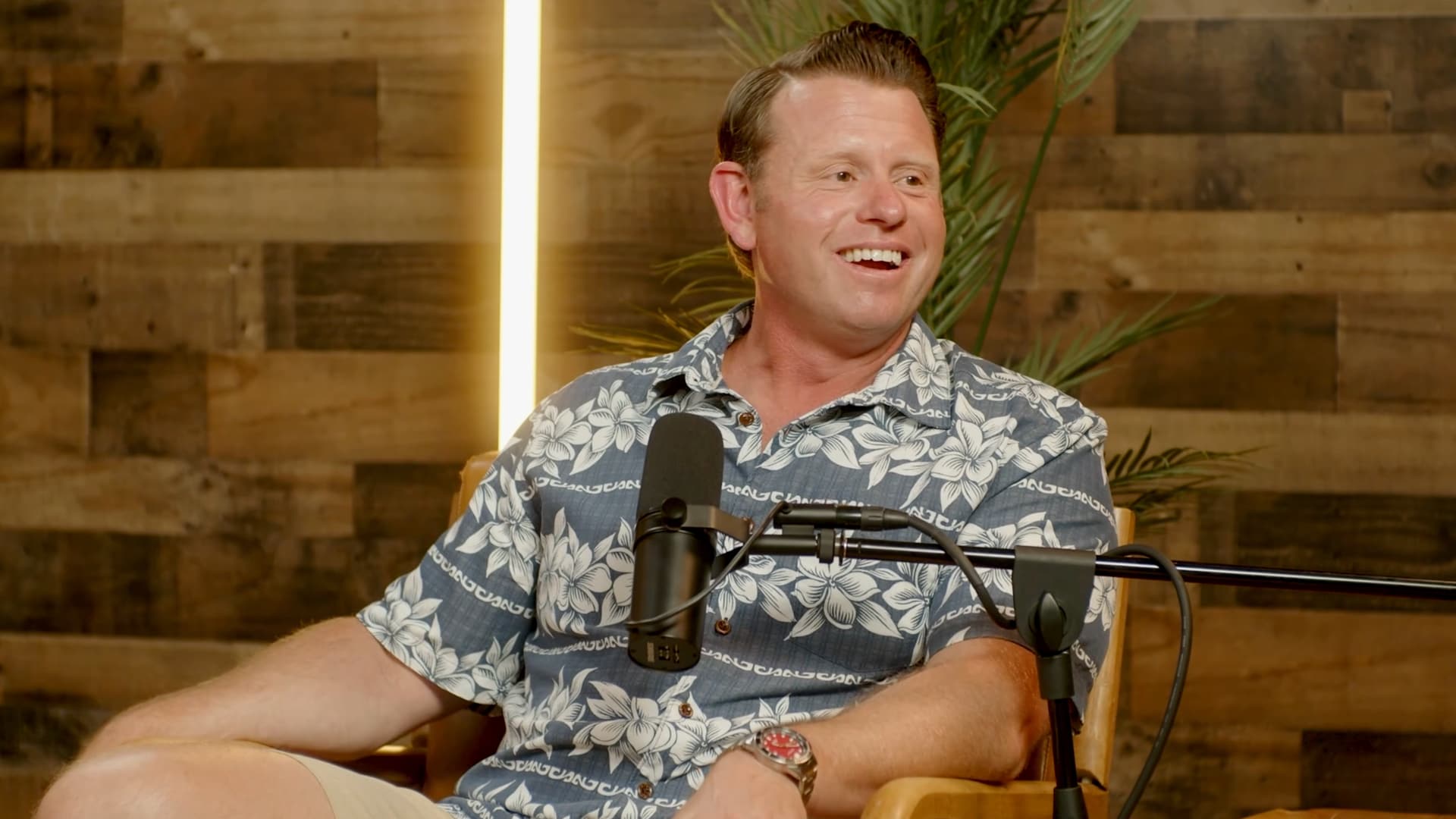
Randall Parkes says the VA's mental health care was phenomenal and the same VA's answer on his shoulder was forget it. Ten Veterans on which door they walked through.
By Vegas Veteran Voices,
From Every Marine Defends Their Boot Camp. He's One of the Few Who Saw Both. / Randall Parkes USMC
These are Veterans’ own accounts, not medical advice. Written November 2026.
He filled out a request to talk to somebody. Randall Parkes, a Marine Corps Veteran, drill instructor and founding MARSOC Raider, says he was talking to a counselor within about two days.
“I submitted a request to speak to somebody and I think within 48 hours.”
Then he went to the same system about his shoulder and back, which he says came from jumping out of planes. His review of that visit is one word, “forget it,” and a comparison to the DMV that we will let him keep.
“Then yeah, forget it.”
That is the whole question and the whole answer. Ten Veterans, filmed by Vegas Veteran Voices, a Las Vegas nonprofit, brought up VA health care in their own episodes, mostly in passing. Here is what they said.
What it is
VA describes the Veterans Health Administration as the largest integrated health care system in the United States, with 1,380 health care facilities and over 9.1 million Veterans enrolled, according to a page last updated June 2, 2026. Big systems have a lot of doors. The Veterans below walked through different ones.
The door that opened
Parkes does not call himself a fan of the VA. He says the opposite first.
“I know the VA gets a bad rap and rightly so. They’ve earned that reputation. But my experience with the VA on the mental health side has been phenomenal.”
He had tried the Naval Hospital first, he says, and it did not work out; COVID hit around then too. After he got out he did EMDR through the VA. He had heard the horror stories.
“I’ve heard the horror stories about going to the VA and they just pump you full of pills and that wasn’t my experience for the mental health stuff.”
Delvin Bourn, a U.S. Army Veteran, 82nd Airborne paratrooper and Gulf War Veteran, has a stranger story. When his arms and legs went numb in 2014, he says, the VA sent him to a research center in Palo Alto, California.
“They send two Veterans a week and there’s eight doctors sitting there and they throw your medical records in there.”
The doctors told him none of them had seen his condition before, he says, and that they had read about it in books. They said they were going to help him anyway. He says he now goes to a VA infusion clinic once a month.
Lindsay Gutierrez, a U.S. Air Force Veteran and two-time living organ donor, found the right person in the end.
“It’s the VA and you don’t always get the right people at the right situation.”
She says a neurologist at a VA in Gainesville, Florida finally listened and told her what the symptoms she had been describing were.
“She was amazing and listened to me.”
The door that did not
“Cheeks” Aguillon, a U.S. Army Veteran and former chaplain assistant who now serves on the Vegas Veteran Voices board, went to a VA emergency room with a pain he describes as the worst he had felt. He says they ran an ultrasound and a CT, thought it might be his gallbladder, and tried to find a surgeon.
“The general surgery team wants nothing to do with you.”
He says the ER then arranged for him to be taken by ambulance to Nellis, where, he says, a team would take him. It is the kind of detail that only sounds funny afterward.
Two Veterans describe the care as a prescription problem, and we report them next to Parkes and not against him. Jason Brooks, a medically retired Marine and Recon and SERE instructor, says the VA put him on a long list.
“At one point they had me on seven different medications.”
Rachel Veronica, a U.S. Army Veteran and clinical hypnotherapist, says it was the whole of what she was offered.
“The VA wasn’t helpful, they just wanted to push drugs on me.”
That is two Veterans on one side and Parkes on the other, and neither account cancels the other. These are accounts, not medical advice, and not a verdict on any provider.
The person in the room
Some of the complaints are not about the VA’s medicine. They are about who it sends. Juan Valdez, a Marine Corps Veteran and Purple Heart recipient, says:
“I can’t stand some of the therapists that come with the VA because it feels like it’s not necessarily that they don’t care. It’s like I’m talking to a wall sometimes.”
Tommy Nutzmann, a retired U.S. Navy Chief and creator of After the Uniform, hit a related wall. He started with VA psychology and therapy, and then the appointments changed.
“I had appointments that became like in person to now virtual. I need somebody to talk to in person.”
He found peers instead, through the Veteran health community.
Las Vegas
Bobi Pike-Oates, a retired Air Force Senior Master Sergeant, still gets her medical care at Nellis. She watched the local hospital grow and she names the squeeze.
“The problem here in Vegas is that sometimes the medical care in the community is going to take even longer. Because we are a medical desert because we don’t have the doctors, we don’t have the social workers.”
She also says what she is glad about. Waiting for a mental health provider, she says, used to run three, six, nine months, and that has changed. That is her account of the rules, so we link VA’s own page and not the details: VA’s mental health care page says you can call or walk in to any VA medical center.
Travis Jewell, a Marine Corps Veteran and 1/6 mortarman who now makes military comedy skits, says the time adds up.
“It adds up.”
He means the number of appointments and exams, and explaining each one to an employer.
So, is it any good?
The honest tally from our tapes: mental health, good for one Marine and a bad prescription story for two others; specialty care, a strange research center and a monthly clinic for one Army Veteran; a good neurologist in Florida; an ER that sent a patient to Nellis; and a Las Vegas medical desert.
Nobody says it is good across the board. Nobody says it is bad across the board. They say it depends on which door you walk through. Parkes put both halves in one breath: the VA has earned its reputation, and its mental health care was phenomenal for him.
We have never asked a guest, on camera, “Was there one person at the VA who changed things for you?” We are going to start.
Where to go from here
These are places that exist and what each one is., and nothing here is medical advice.
- VA Southern Nevada Healthcare System The federal VA health system for Southern Nevada, with a main medical center in North Las Vegas and outpatient clinics across the valley and in Pahrump and Laughlin. 702-791-9000.
- Las Vegas Vet Center A VA counseling center, separate from the hospital, with free confidential individual, group, couples and family counseling. 702-791-9170.
- VA health care VA's official starting page for eligibility and applying, with information about a facility, including how quickly you can be seen.
A listing is not an endorsement.
Related questions
If you are a Veteran in crisis or having thoughts of suicide, call 988 and press 1, or text 838255. The Veterans Crisis Line is free and confidential, 24 hours a day.
Go hear them say it
Every quote above links to the second it was said. Start with Parkes at 59:34. More places to turn in Southern Nevada are at Veteran resources in Las Vegas.
Stories quoted in this article
- Every Marine Defends Their Boot Camp. He's One of the Few Who Saw Both. / Randall Parkes USMC
- She Paved The Way For Women In The Air Force | Bobi Pike-Oates | US Military
- Cheeks on Set: From Barracks to Behind the Camera
- Something Wasn’t Right | Delvin Bourn (US Army Veteran)
- Every Marine Asks Where You Deployed. He Hated the Answer. / JMach & Tommy Nutz
- Wounded Warrior Project: From Afghanistan to Finding Purpose with Juan Valdez
- Why SERE Breaks People | Marine Recon Instructor Explains Survival Training
- Hypnotherapy ASMR w/ Rachel Veronica | Army Veteran, Addiction Recovery, Identity Rewire
- She Donated Two Organs to Fellow Veterans.
- Every Lance Corporal Is Thinking It. Travis Jewell Says It. (@jewell_jits)