
Why do military members marry so young?
Nobody on our tape blames the Army for it. One Veteran says the system pays you to do it, and a study agrees.
By Vegas Veteran Voices,
From Would You Turn Down Special Forces Selection for Her? He Did. / Daniel Coffeen US Army
We did not set out to ask this one. Veterans kept answering it sideways, in the middle of other stories: a neighbor met in the dorms, a system you learn to game, a parents’ marriage that was over young.
We will say up front that this is thinner than most of our pieces. In interviews filmed by Vegas Veteran Voices, a Las Vegas nonprofit, four Veterans (five counting both of a married pair) speak to it from their own lives, and none of them says “I married too young.” We are not going to put that in their mouths. What follows is what they did say, set next to what the research says, with a list at the end of what we would ask next time.
What the numbers say
The Census Bureau’s latest figures put the median age at first marriage in the United States at 30.8 for men and 28.4 for women, up from 23.5 and 21.1 in 1975.
Put that next to one of the few careful studies of military marriage. In 2014, Jennifer Lundquist, a sociologist at the University of Massachusetts Amherst, and Zhun Xu published a study, “Reinstitutionalizing Families: Life Course Policy and Marriage in the Military”, in the Journal of Marriage and Family. Their team interviewed nearly 80 people tied to two U.S. Army installations in Germany. The soldiers they spoke to married at an average age of 22. The report says marriage is much more common among service members than among civilians of the same age.
Why? The researchers point first to moving. The Army relocates people every couple of years, and the military pays to move a family only if you are married, which makes marriage the practical way to stay together. Many soldiers also described marriage as a source of stability in front of a possible deployment and separation. Housing came up less than people assume. The appeal, the study says, was mostly getting out of the barracks. It is one study of one service in one country, and we are not claiming it covers everyone.
What our Veterans say
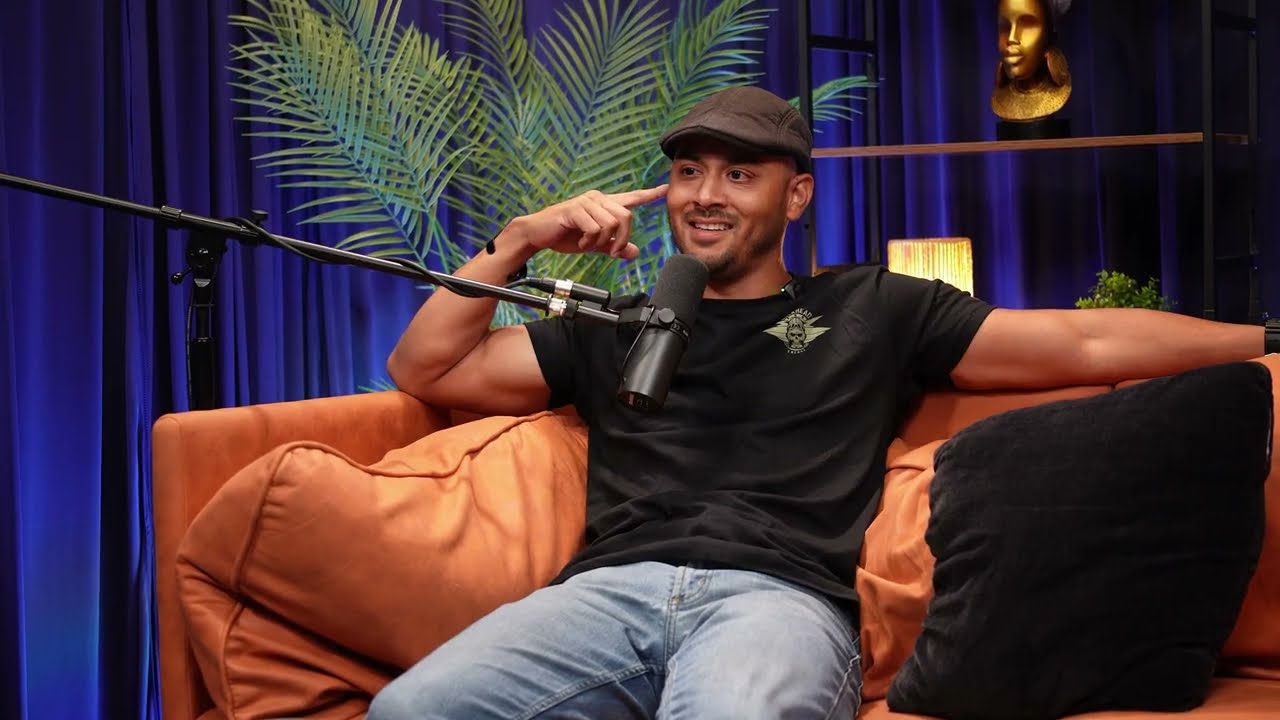
Daniel Coffeen, a U.S. Army Veteran, Ranger School graduate and Medical Service Corps officer, describes the same system from the inside, and the way he tells it, it was not a secret.
“That’s how I got stationed in Hawaii twice because you just game the system.”
He says the Army encourages marriage, with more money and orders that keep a couple together. Then he says what he did with that.
“You get encouraged to get married”
He did get married. He says he liked his ex-wife a lot and that they had a good partnership. The plans fell apart when his name came up for Special Forces selection and hers pointed to Texas. (That story is in our piece on whether military marriages last, which also covers the other half of the question.)
The other way in is the barracks. Jamie and Cole Waterberry, both Veterans, met the way a lot of couples in uniform do, and they say so.
“Just classic how a lot of people have met in the military. We were nextdoor neighbors in the dormitories.”
(Their lines run together at that point, so we credit the episode, not a person.) They knew each other a year or a year and a half before it became a relationship. Both then deployed, sometimes at the same time. They say that in their first five years they were away from each other for about half of it.
The marriage was not always the starting point. It was sometimes the inheritance. Randall Parkes, a Marine Corps Veteran, drill instructor and founding MARSOC Raider, says he grew up as the child of a very young couple, and he calls it ordinary.
“I have a very typical enlisted man’s upbringing. Parents had me way too young. Got married way too young, subsequently got divorced way too young”
That is his description of his parents, not himself, and we do not read more into it than that. It does suggest the pattern was already out there.
And some of it ends in a way that stays with people. AJ Kehl, a U.S. Air Force Veteran and career firefighter, says he went through a couple of divorces in the service.
“I went through a couple divorces during my time in the military, which really made me feel a lot of shame and guilt”
He says that for a long time he took it as proof about himself. We think that is the most useful sentence in this article, because it is the one a young couple does not hear beforehand.
What we cannot say
That is the honest limit. Our guests tell us the Army pushes marriage, that the barracks produce couples, and that some of those marriages end. None of them says they married young for the money, or that they would not do it again. We have no tape of anyone describing a wedding at 19 and a regret at 25. If you are one of those people, we want to hear it.
A statistic about military marriage tells you the road has a name. It does not tell you who is walking it. If you want the other half, the marriages that held and what the people in them say about why, it is in Do military marriages last?.
Where to go from here
No advice from us. These are places that exist, what each one does and how to reach them.
- Military OneSource A Department of Defense service with a 24-hour phone line and chat. Free, short-term, confidential counseling for individuals, couples and families. 800-342-9647. Check its eligibility page for how long it stays open after you leave service.
- Las Vegas Vet Center A VA counseling center, separate from the hospital. Free, confidential individual, group, couples and family counseling. 702-791-9170. Anywhere in the country, the Vet Center line is 877-927-8387.
- Nellis AFB Military and Family Readiness Center The base information and referral center, offering relocation help, financial readiness and classes by appointment or walk-in. 702-652-3327. Call first to confirm base access and eligibility.
A listing is not an endorsement.
Related questions
If you are a Veteran in crisis or having thoughts of suicide, call 988 and press 1, or text 838255. The Veterans Crisis Line is free and confidential, 24 hours a day.
Go hear them say it
Every quote above links to the second it was said. If you are in Southern Nevada and want a list of places to talk to somebody, it is at Veteran resources in Las Vegas.