
Should I join the Marines?
The recruiter's whole pitch was a hat. Nine Marines on what they bought, what it cost, and the part nobody sells: the day you stop being one.
By Vegas Veteran Voices,
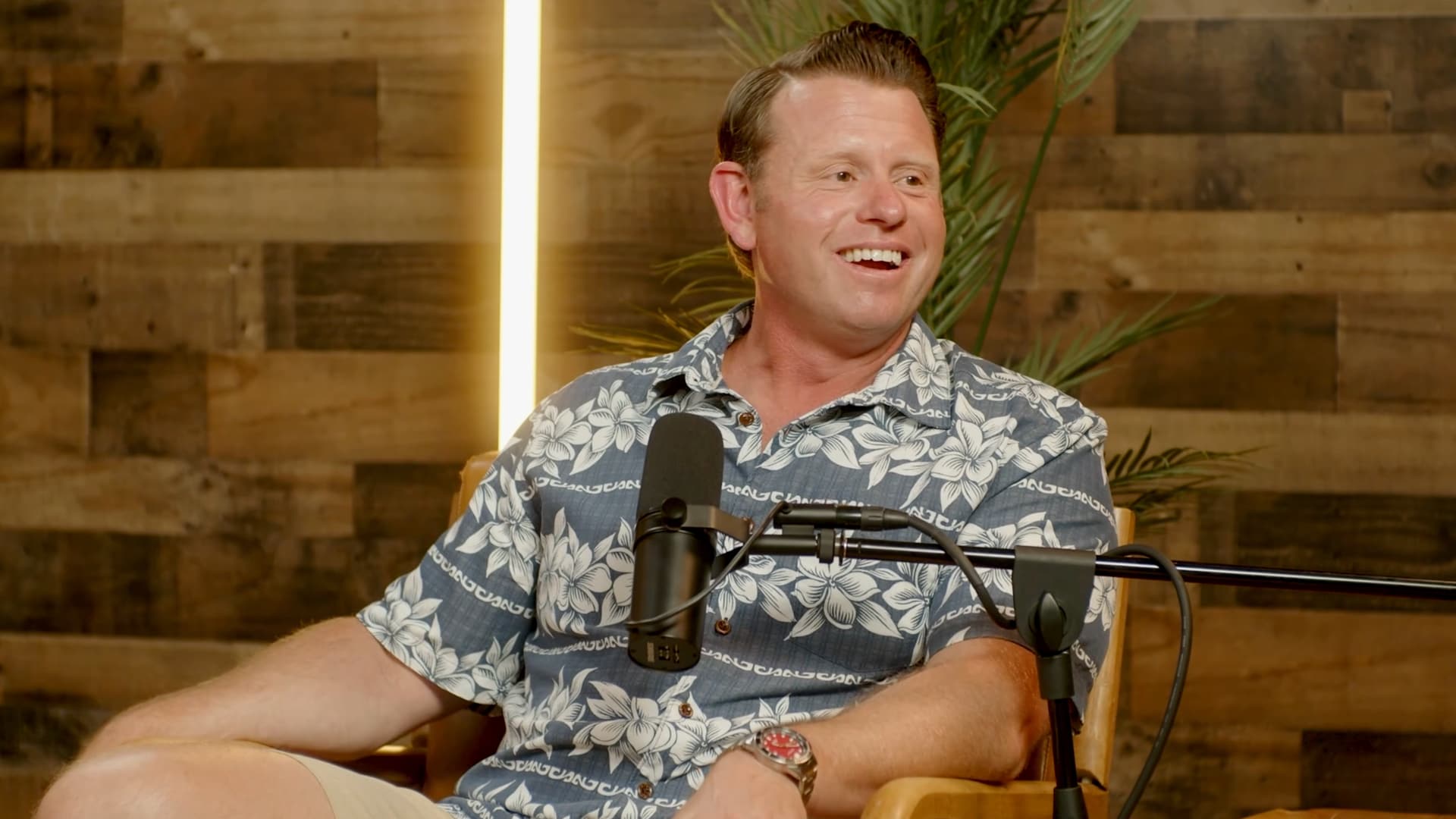
From Every Marine Defends Their Boot Camp. He's One of the Few Who Saw Both. / Randall Parkes USMC
Randall Parkes had a $10,000 Army bonus in his pocket and walked back into the Marine Corps recruiting office to see if they would match it. The recruiter took off his barracks cover, slid it across the desk, and pointed at the emblem.
That was the offer. The hat. Parkes signed.
Nobody at Vegas Veteran Voices is going to tell you to join the Marines, or not to. We are not recruiters and we are not talking you out of it. We asked the Marines we have interviewed what the Corps was, what it did for them and what it did not. Nine of them answered on camera. They do not agree, and the places where they do not agree are the useful part.
What the Marines sell is the hard part
Most branches sell a job, a bonus or a place to live. The Marines, in the words of the Veterans we filmed, sell the difficulty itself.
Edward Haines, a retired Marine Master Sergeant, had wanted it since a cartoon. What turned a fantasy into a decision was his father, a Marine Reservist.
“My dad’s like, ‘It’s hard. Not everybody can make it.’”
Haines says his answer was I’ll show you. The Marine Corps, by its own account, runs recruit training for 13 weeks at one of two depots, Parris Island or San Diego. He went on to 20 years and says he has no regrets.
“No regrets. I think I certainly made the right choice.”
Parkes retired at 38, after a career as a drill instructor and a first sergeant. He does not hedge about what the Corps is to him now.
“And the Marine Corps is a big part of who I am today, but it doesn’t define me like in perpetuity.”
He also remembers where he was on September 11.
“I was in boot camp during September 11th. And then I didn’t deploy until ‘05.”
That is four years between the day the country went to war and the day he went.
What you may not get
Travis Jewell, a Marine Corps Veteran and mortarman with 1/6, enlisted in the post-9/11 world expecting a war. He says he got there at the end of it.
“I didn’t go to Afghanistan. I didn’t go to Iraq. I got there on the back end of that.”
He did a float, a seven-month stint in Norway on a NATO exercise, and a lot of garrison time. What he found was the platoon.
“But where I found my sense of belonging, my purpose was when I was like with my platoon, with those boys on deployment, going through training in the fleet.”
Michael D’Angelo, a Marine Corps Veteran and machine gunner, got a harder version of the same lesson. He joined as a reservist because of a recruiter’s promise, and the promise did not hold. We have a whole article on that. He says the Marines who came through his unit from the fleet, guys who had been in it, told him he was a good Marine and should keep trying to go active.
Whether you deploy, and where you land, is decided after you sign. The people we interviewed say so themselves.
The brotherhood, which they do not agree on
Every Marine will mention it. They do not mean the same thing.
Tom “Ghost” Martin, a Marine Corps Veteran and owner of The Leatherneck Club, put it this way in our Marine Corps birthday episode. (Vegas Veteran Voices shares an address with The Leatherneck Club.)
“The whole time I was in the Marine Corps, brotherhood meant brotherhood.”
He says it never excluded the women. If somebody wants him to say sisterhood, he says, he will, but for him the word means everybody. Later in the same episode, Jessica Jay Dee, a Marine Corps Gunnery Sergeant and combat Veteran, answered him from her side of it.
“I know that I am joining a boys club, a men’s club. I know that I am going to have to uphold a certain standard in order to be respected, in order to be valued, and in order to be an asset to the mission.”
She takes “brotherhood” as a compliment and says she did not expect special treatment. She can only speak for herself, and says so.
“The way that I carried myself, I demanded respect and I also rendered it. And so I might have had a very different experience.”
Chelsey Gray, a U.S. Marine Corps Veteran and parachute rigger, had a different experience. She came in wanting to belong.
“When you’re the only female, you’re just trying to be a part of the brotherhood.”
What happened to her in her unit is in her own episode, which carries our warning, and in a separate piece where we collect what Veterans say about it. We are not summarizing it here. We are only saying that the word every Marine uses, and that three of these Veterans heard three different ways, is a word that means what the people around you make it mean.
The day it ends
The part the recruiter does not have a slide for.
Juan Valdez, a Marine Corps Veteran and Purple Heart recipient who works with Wounded Warrior Project, went in at 19 and came out at 29.
“I felt like Ricky Bobby. I didn’t know what to do with my hands.”
He says those were some really dark times, and that what he missed was structure, because his battalion had always already decided where he would be.
“You get out and you just don’t have that. So, you have to build the structure. You have to build that community.”
D’Angelo says it in eight words.
“It sucks to not be a Marine anymore.”
Erik Schreiner, a Marine Corps Veteran who works at Adrenaline Mountain, joined in the 1990s so he could drive Humvees off-road, and loved it. He did not want to leave.
“I didn’t want to get out, but I did cuz my mom got sick with cancer, and unfortunately, I had to choose between a military, a mom, and mom won.”
Jewell found it with his platoon, and says it is hard to find again. Pew Research Center asked Veterans in 2019 whether they would advise a young person close to them to join the military. Roughly eight in ten said yes, against 45 percent of all American adults. That survey covered Veterans of every branch, not only Marines.
So, should you?
We will not answer that. Here is what the nine said, in short. Haines says he has no regrets. Parkes says the Corps is a big part of who he is and not all of him. Jewell got a platoon and no war. D’Angelo got a recruiter’s promise that did not hold. Valdez and Schreiner say the hard part came at the end, not the beginning. Ghost, Jessica Jay Dee and Gray do not describe the same brotherhood.
That is the honest report. If it does not settle the question, it is because the question is not settled.
Where to go from here
No advice from us. These are places that exist, what each one does and how to reach it.
- Las Vegas Vet Center A VA counseling center, separate from the hospital. Free, confidential individual, group, couples and family counseling. The national Vet Center line is 877-927-8387.
- Safe Helpline A private, anonymous support line for the military community affected by sexual assault. 877-995-5247, or online chat.
- Military OneSource A military service with a 24-hour phone line, 800-342-9647, and confidential help with questions about military life. Its site links to who is eligible.
A listing is not an endorsement.
Related questions
If you are a Veteran in crisis or having thoughts of suicide, call 988 and press 1, or text 838255. The Veterans Crisis Line is free and confidential, 24 hours a day.
Go hear them say it
Every quote above links to the second it was said, on YouTube. Start with Haines and Parkes if you want the case for it, and Valdez if you want the day after. And if you are in Southern Nevada, our list of posts, clubs and teams is at Veteran resources in Las Vegas.
Stories quoted in this article
- Every Marine Defends Their Boot Camp. He's One of the Few Who Saw Both. / Randall Parkes USMC
- He Listened for 20 Years. Now He Tapes Ankles at a High School.
- Why Do Marines Treat Dark Humor Like Therapy? Michael D’Angelo USMC 0331
- Every Lance Corporal Is Thinking It. Travis Jewell Says It. (@jewell_jits)
- Wounded Warrior Project: From Afghanistan to Finding Purpose with Juan Valdez
- There’s No Such Thing as an Ex-Marine | 250th Marine Corps Birthday w/ Ghost & Jessica Jay Dee
- Every Marine Calls It a Brotherhood. She's Finally Saying What Hers Did. / Chelsey Gray
- What Veterans Call an “Alive Day” at Adrenaline Mountain