
Is joining the military worth it?
About eight in ten Veterans would tell a young person close to them to join. We asked nine of them what it paid, what it took and what they would do differently.
By Vegas Veteran Voices,
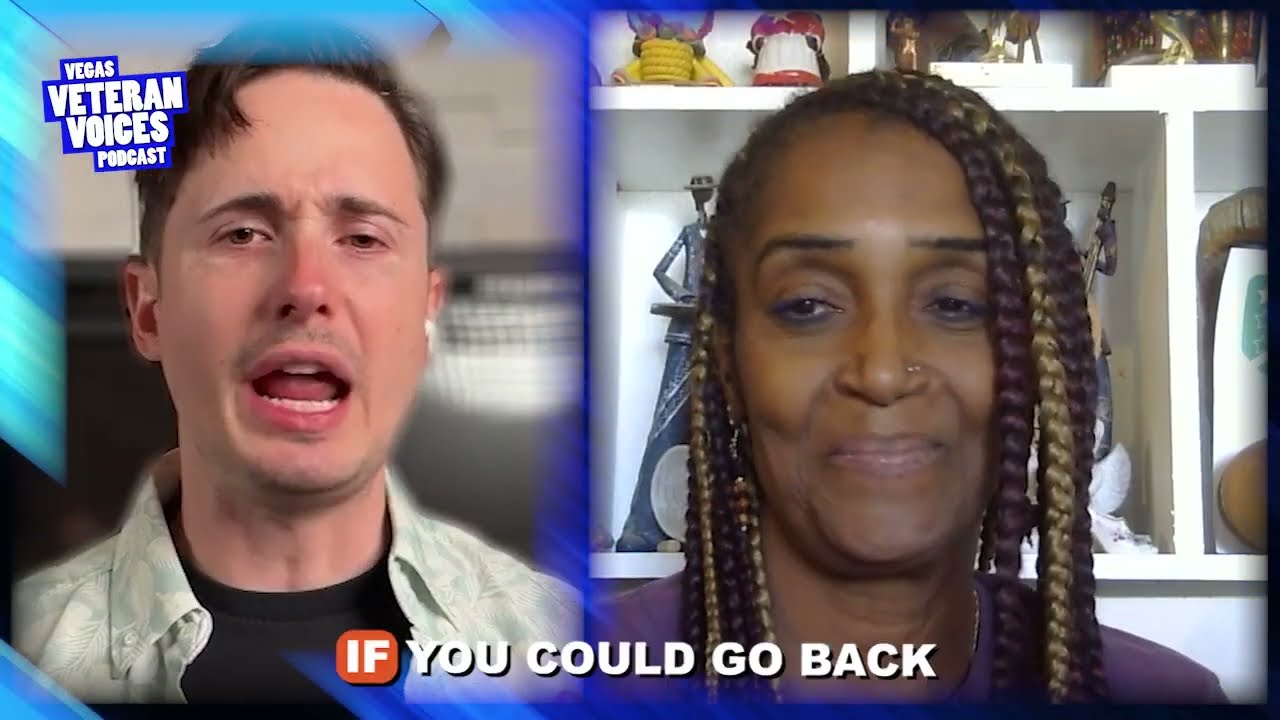
From Breaking Barriers: Evelyn Pacheco (ARMY VET) on Becoming Nevada’s First Black Female Union Plumber
Ask a Veteran whether the military was worth it and watch them do arithmetic in public.
The pay goes in one column. The people go in another, with a note beside them that says “can’t be priced.” The years go somewhere else. Somebody always brings up what it cost and then says “but” before they finish the sentence. It is a ledger, and nobody agrees on how to total it.
The one number we can give you is Pew Research Center’s. In 2019 Pew asked U.S. Veterans whether they would advise a young person close to them to join the military. Roughly eight in ten said yes. Among all American adults it was 45 percent yes and 50 percent no. That survey covers every branch and every era, and says nothing about what the Veterans meant by yes.
That is where we come in. In interviews filmed by Vegas Veteran Voices, a Las Vegas nonprofit, nine Veterans talked about the deal they made, in their own accounting.
What it paid
Evelyn Pacheco is a U.S. Army Veteran and Nevada’s first Black female union plumber. She never pictured herself in the military as a little girl. Asked about it, she did not hesitate.
“I’m glad I did. I am.”
She went on to a trade where, in her words, making $100,000 a year was huge, and where you can go to any state or country and work once your apprenticeship is done.
Bobi Pike-Oates, a retired Air Force Senior Master Sergeant, enlisted in the 1970s because she was too short for a city police department. She stayed past the point where she could have retired and was chosen to help stand up the Air Force’s first unmanned reconnaissance squadron. She still talks about it as a thing she built.
“It was like my baby to start with. So, I’m just proud of the folks up there and what they’re doing.”
Edward Haines, a retired Marine Master Sergeant, did 20 years and counts the first thing it gave him as time. He was not ready for college.
“I think where I was at maturity-wise in high school at that point, I think college wouldn’t have been the right answer.”
He says he has no regrets and that he made the right choice.
Curtez Riggs, a retired Army First Sergeant and founder of Military Influencer Conference, served 21 years. He counts the benefit in a different currency: he says recruiting duty in his hometown taught him how to network and prepared him for civilian life years before most people think about it.
“I’m one of those weird guys that got lucky.”
What it took
The people who answered this honestly tended to say the cost is not the one you expect. It is not mostly the hard parts. It is the day it stops.
Michael D’Angelo, a Marine Corps Veteran, machine gunner and stand-up comic, has plenty of complaints about how he got in. But when he talks about leaving, he does not talk about the hard parts.
“It sucks to not be a Marine anymore.”
He says the environment was harsh and you hated life a lot, but it was consistent and predictable, and the civilian world has a lot more time alone.
Juan Valdez, a Marine Corps Veteran and Purple Heart recipient who works with Wounded Warrior Project, went in at 19 and out at 29. He lists what he lost: the roommate, the Marines around him, a battalion that had already decided where he would be for the next month. He calls what followed some really dark times.
“And you get disappointed when you don’t have that same brotherhood.”
Travis Jewell, a Marine Corps Veteran and mortarman with 1/6, got out into a good career and says what he missed was what the platoon gave him.
“But where I found my sense of belonging, my purpose was when I was like with my platoon, with those boys on deployment, going through training in the fleet.”
All three describe the cost as something that arrived after the contract ended. We have a separate piece on what getting out is like.
Would you do it again
Caitlin Duffy, a U.S. Army Veteran, 50 cal gunner and VA loan specialist, signed at 17 because she did not want to go home and did not want college. She did a first duty station in Germany, Iraq deployments, and a while after she got out when she did not tell people she was a Veteran. She does not hedge.
“I would do it again a million times over.”
Randall Parkes, a Marine Corps Veteran, drill instructor and founding MARSOC Raider, retired at 38. He answers a different way.
“And the Marine Corps is a big part of who I am today, but it doesn’t define me like in perpetuity.”
He also has a note on how he would run it back.
“If I had to do it all over again, I would have like exited the Marine Corps maybe and then and then went cuz then I would have gotten like BAH.”
He is talking about school. He used tuition assistance while in, then the GI Bill for an MBA, and says a friend who retired first and then went to school came out ahead. We are not endorsing his math. We are noting that a Veteran with an undergraduate degree and an MBA says he would still change the order.
So, is it worth it?
Pew’s number says most Veterans would tell a young person to join. The nine we talked to mostly agree with it. Pacheco, Pike-Oates, Haines, Riggs, Duffy and Parkes describe a good deal. D’Angelo, Valdez and Jewell describe what came after, which nobody briefed.
What they do not say is that you should do it. The yes in these interviews is a yes about their own lives. It comes with a ledger, and it is theirs.
Where to go from here
No advice from us. These are places that exist, what each one does and how to reach it.
- Las Vegas Vet Center A VA counseling center, separate from the hospital. Free, confidential individual, group, couples and family counseling. The national Vet Center line is 877-927-8387.
- VA: About GI Bill benefits VA's overview of its education programs, which help eligible Veterans and family members cover school or job training and some living expenses.
- Nevada Department of Veterans Services (Las Vegas office) The state agency for Veterans. It helps with VA claims and connects Veterans and families to education, housing, employment and health care benefits.
- Military OneSource A military service with a 24-hour phone line, 800-342-9647, and confidential help with questions about military life. Its site links to who is eligible.
A listing is not an endorsement.
Related questions
If you are a Veteran in crisis or having thoughts of suicide, call 988 and press 1, or text 838255. The Veterans Crisis Line is free and confidential, 24 hours a day.
Go hear them say it
Every quote above links to the second it was said, on YouTube. Start with Duffy if you want the yes, and Valdez if you want the footnote. If you want the other side of the decision, are you glad you got out has fifteen more. And if you are in Southern Nevada, our list of posts, clubs and teams is at Veteran resources in Las Vegas.
Stories quoted in this article
- Breaking Barriers: Evelyn Pacheco (ARMY VET) on Becoming Nevada’s First Black Female Union Plumber
- She Paved The Way For Women In The Air Force | Bobi Pike-Oates | US Military
- He Listened for 20 Years. Now He Tapes Ankles at a High School.
- Every Veteran Is On Their Own After the Uniform. Doc and the MIC Founder Prove That's a Lie.
- Why Do Marines Treat Dark Humor Like Therapy? Michael D’Angelo USMC 0331
- Wounded Warrior Project: From Afghanistan to Finding Purpose with Juan Valdez
- Every Lance Corporal Is Thinking It. Travis Jewell Says It. (@jewell_jits)
- From 50 Cal Gunner to VA Loan Nerd | Caitlin Duffy’s Veteran Story
- Every Marine Defends Their Boot Camp. He's One of the Few Who Saw Both. / Randall Parkes USMC