
Where do Veterans find their people if the VFW isn't it?
Nobody we interviewed found their people by looking for community. They found something to do, and the people were already standing there. Thirteen Veterans, plus a list of doors.
By Vegas Veteran Voices,
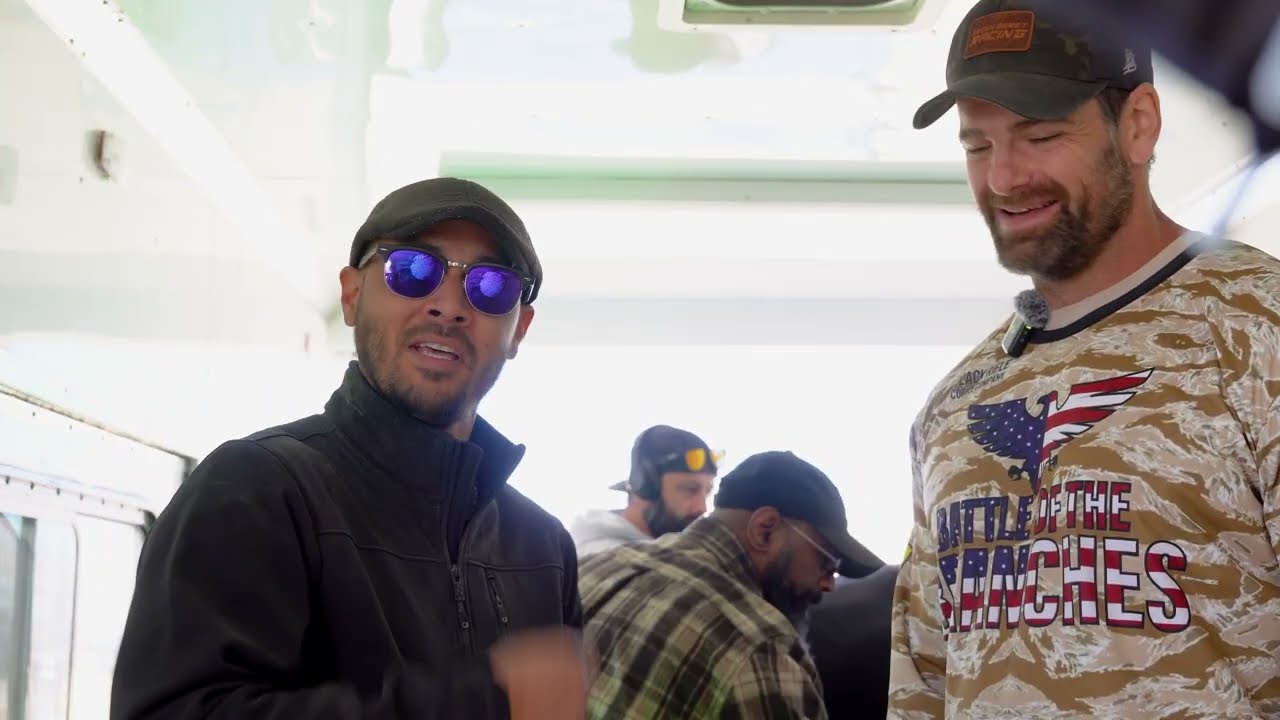
A parking lot. A formation that was supposed to start a while ago. Privates standing around with no word and nowhere to be. Nick Merrick, a former U.S. Army Green Beret and the founder of Green Beret Racing, remembers what happens next, because it always happens. Somebody picks up a rock and throws it at something. Somebody else asks what he is aiming at.
“Next thing you have a whole crowd of dudes sitting around throwing a rock at a thing.”
“We built a competition on something that doesn’t matter because we need something to do.”
That is this whole article. The rest is addresses.
You typed a question about the VFW, and we will get to the hall. But in interviews filmed by Vegas Veteran Voices, a Las Vegas nonprofit, the Veterans who found their people almost never describe walking into a room marked Community. They describe a rink, a chair, a mat, a stage, a hike in very short shorts. A rock and a thing to throw it at. The people were already standing there.
About the hall
Start with what the hall was for. Ross D. Bryant, a U.S. Army Veteran who leads UNLV Military and Veteran Services, tells the origin story of the VFW the way it deserves to be told.
“If you got messed up, you came home and your family dealt with it. And then out of camaraderie, they started hanging out together.”
The VFW’s own history backs him up. It traces its roots to 1899 and Veterans of the Spanish-American War and the Philippines, many of whom came home wounded or sick to no medical care and no pension. It counts more than 1.3 million members today, Auxiliary included. The American Legion, chartered by Congress in 1919, lists more than 1.6 million members and more than 12,000 posts. That is a lot of buildings with a flag out front and a meeting on the second something of the month.
Here is where we have to be straight with you. Nobody has sat in our chair and told the story of walking into a post and walking back out. We have not asked the question well enough. What we have is one man who watched it from the inside.
Tom “Ghost” Martin, a Marine Corps Veteran of Desert Storm, owns The Leatherneck Club. (Vegas Veteran Voices shares an address with The Leatherneck Club.) When he first knew the place, he says, it was a Marine Corps League bar, and just a bar, like most post bars in the country. The regulars had it the way they liked it.
“The patrons at the bar were Korea War, Vietnam War, and I was probably one of the very first Desert Storm Marines to walk in this place.”
He does a fair impression of the welcome a younger Veteran got: “What are you doing to my bar, kid?” Then everyone wondered why business was slow.
He did not leave. He volunteered. That is worth knowing if your local post feels like somebody else’s living room: every one of them is one or two volunteers away from being a different place, and the old guard were the new guys once.
And some people walk in and it just works. Jo MT, a U.S. Air Force Veteran who loaded bombs for 20 years and now does stand-up, was interviewed at an American Legion and spent the time beforehand outside, shooting the breeze with the Vets who were there. He came in happy.
“Dude, find your group.”
Legion, VFW or whoever is standing around outside, he says. He is not particular.
A thing to hit
Letoi Adams, a U.S. Army Veteran and adaptive athlete with Paralyzed Veterans of America, says it took her four or five years to get through her depression and learn to live in a wheelchair. Then, at a VA hospital in Long Beach, she sat in a basketball chair. She now plays two sports with largely the same crew.
“Out here in Las Vegas, we have a football team. It’s called the Wheelchair Raiders.”
Once a year she goes to the National Veterans Wheelchair Games, which VA and Paralyzed Veterans of America put on together. She remembers her first look at it: more than 600 disabled Veterans, in her count, enjoying each other’s company and rooting each other on. She does not call it a tournament.
“That’s my heart, my butter, and my soul every year. That’s like a family reunion.”
Nate Rosas, a U.S. Army Veteran who served in Afghanistan, found his on ice. He says most of his good friends in Las Vegas are teammates. The strange part is how long some of them were hiding in plain sight.
“I used to play hockey with guys before I got into Veterans hockey and I didn’t have any idea they were Veterans just because we weren’t talking about it.”
“I know people in their 40s and 50s that are vets that started playing hockey just so they could be closer to other vets.”
Learning to skate at 50 to be near your own kind. That is either the saddest or the best thing in this article and we have decided it is the best.
Juan Valdez, a Marine Corps Veteran and Purple Heart recipient, is in pain every day and took up Brazilian jiu-jitsu anyway. His explanation would make sense to anyone who has done a forced march.
“In places like Brazilian jiu-jitsu, you have that camaraderie because you’re suffering, right? You’re suffering together and you’re making each other suffer.”
And Robert “Gunny Claus” Porter, a Marine Corps Veteran of 21 years, walks. Specifically he walks with Irreverent Warriors, whose stated mission is to bring Veterans together “using Humor and Camaraderie,” and whose signature event is a long group hike in silkies, the PT shorts that left nothing to the imagination in 1988 and have not improved.
“I do the Silkies Hikes. Love them.”
He wears socks with bells on them so people hear him coming. We are only reporting.
A job to do
Not everyone wants a game. Some people want a mission, with a start time and a reason.
Sandra “Sharklife” Vidrequin, a Norwegian Army Veteran and conflict photographer, joined Team Rubicon, which calls itself a Veteran-led humanitarian organization and sends volunteers to disasters. She has worked with them locally since coming back to Las Vegas.
“It’s mainly Veterans and some badass civilians that actually join and help, and that spoke to me a lot.”
Jennifer Marshall, a U.S. Navy Veteran, actress and firefighter EMT, is part of Pin-Ups For Vets, a nonprofit that raises money for VA hospitals and promotes volunteering in them. She was in Las Vegas for the group’s 20th reunion when we talked. Her first impression of its founder, she admits, was that nobody is really that nice. Then:
“It’s a wonderful group of women who are very selfless and caring and I’m very proud to be a part of it.”
Michael D’Angelo, a Marine Corps Veteran, machine gunner and stand-up comic, was trying to work out who his audience was. “Who are my people, man?” The established military comedy tours were not interested in an unknown. So he built his own door.
“I sent 400 letters out to Marine Corps units all over the country.”
The pitch was one line: I’m a Marine, I’m a comic, I’ll perform anytime, anywhere, free. A unit wrote back. He went alone, in case it went badly.
A stool
Sometimes the thing to do is sit down. Valdez lives in Las Vegas now and calls it a melting pot where it is hard to connect. He has a workaround at The Leatherneck Club.
“That’s where I get to meet up with all our other Marines.”
Martin, behind that bar, says the place has become a stop on Marines’ Vegas itineraries, right beside the Sphere. They plan on an hour. He has seen it turn into eight.
“They sit at the bar and there’s another Marine next to him who they didn’t serve together, but his sergeant major was his master sergeant.”
No program. No sign-in sheet. Two strangers working out who they both got yelled at by.
Or not yet. Or not only Veterans.
Two guests would like a word with everything above.
Caitlin Duffy, a U.S. Army Veteran and 50 cal gunner who is now a VA loan specialist, stayed away from the Veteran world on purpose for her first few years out, and she worries about the ones who never leave it.
“They’ve been out for four years and them being a Veteran is the first thing out of their mind or first thing out of their mouth.”
She came back when she was ready. Her proof is an offhand line about hearing of a benefit she had never heard of: “I met a vet the other day at Leatherneck and he told me about a program.”
Jason Lee Morrison, a Marine Corps Veteran, Recon Marine, writer and poet, did the opposite. He stayed away from his own community for years, regrets it, and calls going back life-changing. But he will not let you stop there. He started teaching shooting in Oregon and ended up with a local crew he still talks to every day.
“As a Veteran we tend to think, ah, civilians, I don’t really have much in common with them. And that’s not true.”
He also names the price of admission, to any room.
“If you don’t trust anyone, you will never find a trustworthy friend. You need to put yourself out there and get hurt a few times.”
It’s in pockets
So where are they? Valdez, who now works for Wounded Warrior Project, says the trouble is not that the camaraderie is gone.
“As far as camaraderie goes, we forget to seek it because it’s in pockets.”
His employer runs what it calls connection events: rage rooms, glass blowing, baby goat yoga. He has done the goat yoga. He reports that the goats were polite.
“The point of those is to get you out of the house and get you connected to a community.”
A post is a pocket. So is a rink, a mat, a bar stool, a disaster cleanup, a goat. None of our guests found the right one first. Most of them were not even looking. They went to throw a rock at a thing, and somebody asked what they were aiming at.
Where to go from here
No advice from us, and no rankings. These are doors that exist, mostly in Southern Nevada, with what each one says about itself. A listing is not an endorsement. Call before you go; meeting places move.
Posts and clubs
- The Leatherneck Club. A Marine Corps themed bar and gathering place in Las Vegas, open to the public, where several Veteran groups hold their meetings. Two of them are next on this list.
- Marine Corps League, Greater Nevada Detachment 186. The Las Vegas detachment of the Marine Corps League, a membership organization for Marines. (702) 909-0182.
- American Legion Paradise Post 149. A Las Vegas post with a Riders chapter, Auxiliary and Sons of the American Legion. Its site says it meets the second Sunday of each month at The Leatherneck Club. 702-606-4633.
- VFW Post 12101. A Veterans of Foreign Wars post in the south valley. Its site lists a monthly meeting and a monthly social breakfast. (702) 465-9121.
- VFW Department of Nevada. The state headquarters, in North Las Vegas. A starting point for finding the post nearest you. 702-538-0873.
Sports and outdoors
- Team RWB Nevada, Las Vegas chapter. The local chapter of Team Red, White & Blue, a national nonprofit that brings Veterans, service members, families and supporters together through fitness and social events.
- Paralyzed Veterans of America, Nevada Chapter. For Veterans with spinal cord injury or disease, MS or ALS. Advocacy, benefits support, sports and recreation. Its site says membership is free for eligible Veterans. (702) 646-0040.
- Irreverent Warriors. A national nonprofit that brings Veterans together through humor and camaraderie, best known for its Silkies Hikes.
- National Veterans Wheelchair Games. An annual multi-sport event co-presented by VA and Paralyzed Veterans of America. Its site lists the next games for July 14 to 19, 2027, in Orlando.
Service, arts, legacy and a table to sit at
- Team Rubicon. A Veteran-led humanitarian organization whose volunteers respond to disasters in the United States and abroad.
- Honor Flight Southern Nevada. An all-volunteer nonprofit that flies Southern Nevada Veterans of World War II, Korea and Vietnam to Washington, D.C. to see their memorials, at no cost to the Veteran. 702-749-5912.
- Pin-Ups For Vets. A national nonprofit that raises money for Veterans’ health care, donates to VA hospitals and promotes volunteering at them.
- Wounded Warrior Project. A national nonprofit with peer-led support groups and local and virtual events. Its site says its services are free for registered warriors and their families.
- Las Vegas Vet Center. A VA counseling center, separate from the hospital, free and confidential. Its page also lists bowling, cycling, a Dungeons and Dragons group and a figure painting class. Call center, any hour: 877-927-8387.
Women Veterans
- Women Veterans of Nevada. A Southern Nevada membership group for women who served in any branch or era, with general meetings in Las Vegas every other month.
- Women Veterans Call Center. A VA line staffed entirely by women, some of them Veterans, that helps women Veterans find their way around VA and reach their local program manager. Call or text 1-855-829-6636.
If you are a Veteran in crisis or having thoughts of suicide, call 988 and press 1, or text 838255. The Veterans Crisis Line is free and confidential, 24 hours a day.
Go hear them say it
Every quote above links to the second it was said. Start with Merrick and the rock, then Adams. The full list of posts, clubs, teams and services we have checked is at Veteran resources in Las Vegas. Pick a pocket.
Stories quoted in this article
- This Shouldn’t Have Worked… But It Did
- Most Veterans Don’t Know Their Education Benefits, The Man Who’s Helped 9,000 Claim Them
- "GHOST" // From Warfighter to Local Legend: The Untold Story of Ghost & the Leatherneck Club (recorded before Vegas Veteran Voices became a nonprofit)
- Marine Corps Birthday Special!!!! Must Watch!
- Comedy, MREs, and the Cost of Military Life w/ Jo MT
- Adaptive Sports Saved My Life | Letoi Adams’ Journey
- How Hockey Is Giving Veterans a Second Chapter / Really OK Hockey / Las Vegas Warriors @ Able Baker (recorded before Vegas Veteran Voices became a nonprofit)
- Wounded Warrior Project: From Afghanistan to Finding Purpose with Juan Valdez
- The REAL Story of GUNNY CLAUS (You’re Not Ready)
- From Ukraine to the Front Lines: Sandra Vidrequin ‘Shark Life’ on War Photography
- You’ve Seen Her on Stranger Things. Here’s What Nobody Knew About This Navy Veteran.
- Why Do Marines Treat Dark Humor Like Therapy? Michael D’Angelo USMC 0331
- This Marine Lost Everything… And Had To Start From Zero | Jason Lee Morrison
- From 50 Cal Gunner to VA Loan Nerd | Caitlin Duffy’s Veteran Story