
What is infantry life really like?
Everyone else in the military says they are in support of you. Seven Veterans on the smartest guys they ever met, the best friends they ever had, and what happens when the stakes drop.
By Vegas Veteran Voices,
There is a sentence every non-infantry Veteran has said at some point: “I was in support of the infantry.” It is true. It is also the closest thing the military has to a participation trophy.
The Marine Corps describes its infantry as a ground force specializing in close-quarters combat on foot, and lists the jobs: riflemen, machine gunners, mortarmen, anti-tank missile gunners, scouts, reconnaissance and sniper specialists. That is the brochure. We asked Veterans who did it, in interviews filmed by Vegas Veteran Voices, a Las Vegas nonprofit, what it was actually like. Not all of them agree it was the best thing they ever did. Almost all of them agree about the people.
The job everybody supports
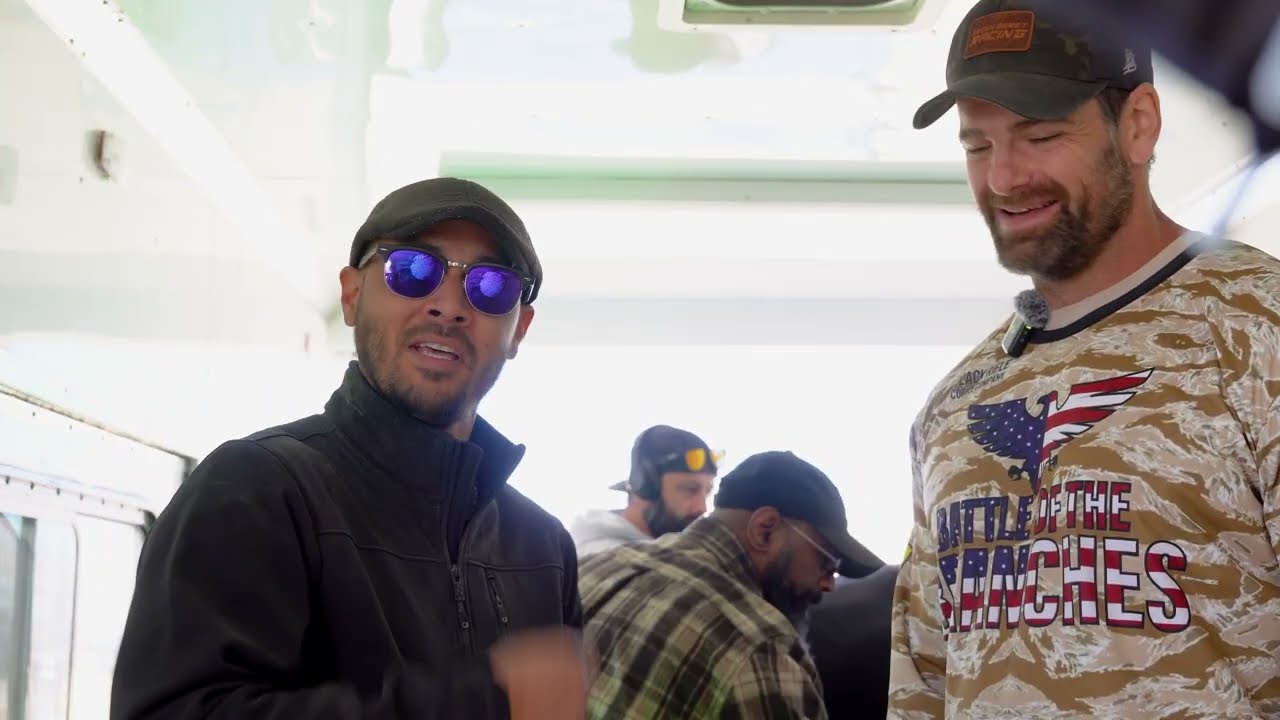
Nick Merrick, a former U.S. Army Green Beret and founder of Green Beret Racing, joined the infantry in 2003, went to a Stryker unit in Alaska, and later left for Special Forces. You might expect him to tell you the teams are better. He does the opposite.
“I love the infantry in many of the ways. It’s a workman’s place, right?”
And he is sharp about people who look down on it.
“You don’t know, man, that’s a hard job. Like those dudes are out there taking the brunt of everything.”
Maximilian Uriarte, a Marine Corps infantry Veteran and creator of Terminal Lance, did not so much choose infantry as refuse every other option. His recruiter told him his test scores were high enough that he could do anything he wanted.
“I wouldn’t have joined the Marines if I wasn’t going to go infantry.”
Tom “Ghost” Martin, a Marine Corps Veteran of Desert Storm and owner of The Leatherneck Club, signed up in 1986 with a picture in his head. (This is from an interview before Vegas Veteran Voices became a nonprofit, so we use it only as a supporting voice. Vegas Veteran Voices shares an address with The Leatherneck Club.)
“I want to be infantry. I was a Boy Scout. I’m thinking, ‘Yeah, this is glorified Boy Scouts.’”
“We’re going to throw up our tents and we’re going to build campfires and roast marshmallows, but we’re going to do it with guns.”
Then he says what you already know. It is not that.
The smartest people in the building
There is a stereotype, and the infantry knows it well. Travis Jewell, a Marine Corps Veteran and 1/6 mortarman who now makes military comedy, went after it directly. A mortarman, he points out, is a mathematician with a tube: coordinates, ranges, geometry.
“Some of the smartest people that I have ever met have came from the infantry.”
The guys
Ask a Veteran what they miss about infantry life and you almost never hear about the infantry. You hear about the people.
“Where I found my sense of belonging, my purpose was when I was like with my platoon, with those boys on deployment, going through training in the fleet.”
Michael D’Angelo, a Marine Corps Veteran, machine gunner and stand-up comic, says it plain.
“There’s nothing cooler than that. Hanging out with your buddies carrying guns.”
He is describing being a young machine gunner coming out of school. He says that guys do four, eight, ten, twelve years in the infantry and then they have to go get a regular job, and the stakes are low, and you are not with your boys all day. We have more of him in Why can’t I adjust to civilian life?.
You do not have to deploy to be infantry
Jewell was in the infantry from 2015 to 2019. He is the first to tell you what he did not do.
“I’m not like a combat Marine. Like, I didn’t go to Afghanistan. I didn’t go to Iraq.”
He did a float, he says, and spent about seven months in Norway on a NATO exercise. His combat action ribbon, he says with some humor, is from a missile fired at a ship off Yemen while he slept. Whether that counts is a conversation we explored in Am I a real Veteran if I never deployed?. We will not settle it here.
The part where you do not ask for help
Infantry culture has a rule, and it is not written down. Jewell says it out loud.
“I was like, ‘Oh, I don’t need help. Oh, I don’t need to make a claim. I’m good.’ You know what I mean? I’m strong. I’m big man. I’m infantry man.”
He says he eventually went to get checked, was told he was in worse shape than he thought, and now sees a therapist, which he says he does not enjoy and does anyway. That is his account, and we leave it as his.
D’Angelo’s version is about the body. He became, in his word, addicted to the endurance of it, especially as a machine gunner, and he says no one stopped him.
“Nobody told me that it was a problem until it was a problem.”
When it got bad, he says, the Marine Corps offered him a new job or the door. He left in 2013 and went into comedy. More on what service does to the body is in What did the military do to your body?.
The ones who were only passing through
Not everyone who spent time with the infantry was infantry. Daniel Coffeen, a U.S. Army Veteran, Ranger School graduate and Medical Service Corps officer, was pulled out of a support battalion and sent to a Stryker infantry battalion as its medical platoon leader. He says it was the best job he had.
“That was like the most fun I ever had in the military, and it was like really serious.”
“All of my assignments after that never lived up to that time.”
Edward Haines, a retired Marine Master Sergeant, signed an infantry contract at the recruiting office, went through boot camp, and was pulled aside for testing. He ended up in signals intelligence instead, after a special recruiter talked up the intelligence field. A different life. He is not unhappy about it. We include him here because it shows how close the line is.
Merrick, who actually loved the infantry, tells the other half of the same story. He left, he says, because of one thing.
“I didn’t feel like I was having an impact on anything.”
Coffeen found his best job inside an infantry battalion. Merrick left one to feel useful. Same world, opposite verdicts. Hold on to that when someone tells you what infantry life is like.
So what is it like?
It is a place where you are the point of the whole thing, and where you are told that not complaining is a skill. It is the smartest people you have met, who you were told were not, and a group of men you would walk anywhere with. It is a thing you miss in a way that is hard to explain, because the thing you miss is not the pack.
Where to go from here
No advice from us. These are places that exist, what each one does and how to reach it.
- Las Vegas Vet Center A VA counseling center, separate from the hospital. Free, confidential individual, group, couples and family counseling, including for PTSD and grief. 702-791-9170.
- Vet Centers (national) The national Vet Center program. The 24-hour call center line is 877-927-8387, from anywhere in the country.
- Veterans Service Officers, VAST Las Vegas (Nevada Department of Veterans Services) State Veterans Service Officers, accredited by VA, who help with VA claims at no cost. The Las Vegas team sits inside the VA hospital in North Las Vegas. (702) 224-6025 ext. 46025.
- VA: get help from an accredited representative VA's search for accredited help anywhere in the country. VA says the services of an accredited Veterans Service Organization representative on a benefit claim are always free.
A listing is not an endorsement.
Related questions
If you are a Veteran in crisis or having thoughts of suicide, call 988 and press 1, or text 838255. The Veterans Crisis Line is free and confidential, 24 hours a day.
Go hear them say it
Every quote above links to the second it was said. Start with whoever sounded most like you. In Southern Nevada, our list of posts, clubs and teams is at Veteran resources in Las Vegas.
Stories quoted in this article
- This Shouldn’t Have Worked… But It Did
- Who Is the Man Behind Terminal Lance?
- Every Lance Corporal Is Thinking It. Travis Jewell Says It. (@jewell_jits)
- Why Do Marines Treat Dark Humor Like Therapy? Michael D’Angelo USMC 0331
- Would You Turn Down Special Forces Selection for Her? He Did. / Daniel Coffeen US Army
- He Listened for 20 Years. Now He Tapes Ankles at a High School.
- "GHOST" // From Warfighter to Local Legend: The Untold Story of Ghost & the Leatherneck Club (recorded before Vegas Veteran Voices became a nonprofit)