
What do Veterans wish civilians knew?
Everybody says nobody understands. A few of them admit they stopped explaining.
By Vegas Veteran Voices,
From Bootcamp Changed Everything | Greg Cope White on Boots and Becoming Who You’re Meant to Be
Here is the one number that surprised us. In a Pew Research Center survey reported in 2012, 84 percent of post-9/11 Veterans said the American public has little or no understanding of the problems faced by military personnel and their families. For Veterans of earlier wars it was 76 percent. For the public itself, 71 percent said the same thing about themselves.
So the gap is real, and both sides agree on it. The disagreement is over whose job it is to close it.
In interviews filmed by Vegas Veteran Voices, a Las Vegas nonprofit, eleven Veterans told us what they wish people knew, or what they stopped waiting for people to know. We will tell you now that the answer is not a list of facts. It is mostly a list of things civilians cannot get from a list.
It is a weird world, and you cannot explain it from outside
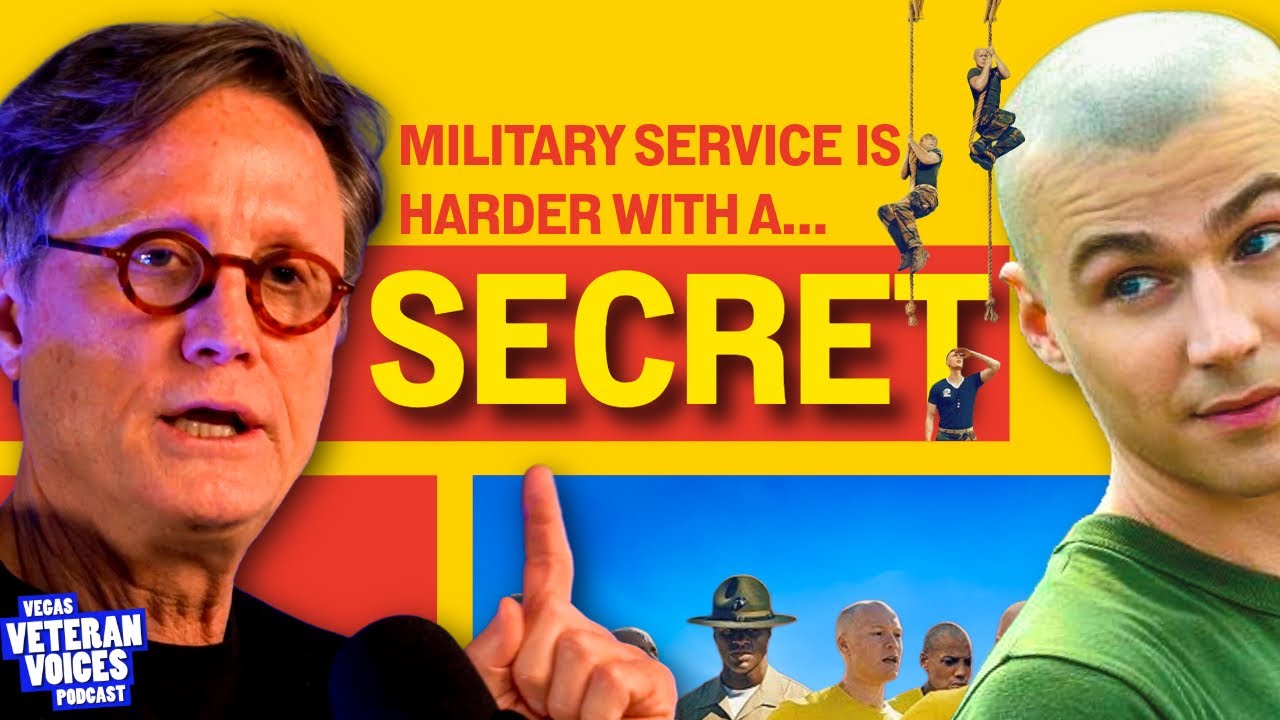
Greg Cope White, a Marine Corps Veteran, author of The Pink Marine and a writer and producer on Boots, wrote a book about Marine boot camp and then helped turn it into a television show, which meant explaining Parris Island to people who had never been near one.
“I knew that nobody understands our world, right?”
He says Veterans swap stories with other Veterans and keep those alive. The trouble is the other kind of conversation.
“Anytime you’re talking to someone who has no experience at all, you’re explaining a really weird world that they really can’t understand.”
His solution was to describe everything in detail, down to the smells and the colors, so a reader in Hollywood could say, I get it now. (He says the show’s set designer rebuilt his squad bay down to the light switches.)
Travis Jewell, a Marine Corps Veteran and 1/6 mortarman, says the same about boot camp.
“Until you’ve been there, it’s just a culture shock, man.”
Jacob “Stitch” Duran, a U.S. Air Force Veteran and cutman in boxing and UFC, points at something harder to see.
“I don’t think civilians really understand the mental game you guys go through.”
Letoi Adams, a U.S. Army Veteran and adaptive athlete with Paralyzed Veterans of America, who uses a wheelchair, says what she feared people would see.
“I was afraid that people would see my chair and not me.”
They get the picture from a screen
Jennifer Marshall, a U.S. Navy Veteran, actress and firefighter EMT, is an actress as well as a firefighter. She is blunt about how her old community shows up on camera.
“I like portraying Veterans and service members on camera because civilians do not do that well. Overwhelmingly, oh my gosh, they don’t do it well at all. And half of us watching are like, that is horrible.”
She says she would rather get it right because the community deserves respect. She is just as plain about what she does not expect in return.
“I don’t think I’m owed anything. I don’t. The only thing I’m owed is my VA home loan and my GI bill.”
She says those are earned, and she says how.
“I paid for it with my body.”
They say thank you, then hand you the job like anyone else
Jamie Waterberry, a Veteran who works in corporate philanthropy, says it is worth preparing for how civilian workplaces treat the word Veteran.
“Be prepared just to go in and do business as usual, especially if somebody hires you, like, okay, well, thank you for your service”
The rest of the sentence, she says, is that they were not specifically targeting Veterans for the job. What she misses is the camaraderie, the lunches, the going-away roasts. The job, she says, is still the job. The fun part is what is not there.
Or maybe it was never about them
Here is where our Veterans split, and it is the part we think matters most.
Juan Valdez, a Marine Corps Veteran and Purple Heart recipient who works with Wounded Warrior Project, says the brotherhood was missing out here, and that he was mad about it. Then he looked at his own side of the table.
“I knew they didn’t understand, but I also didn’t want to give them a chance to understand.”
He also describes what the brotherhood actually was.
“I can absolutely hate the guy next to me. Hate his face, hate the way he talks, right? He annoys the crap out of me, all that stuff, right? But no one’s allowed to harm that guy.”
Michael D’Angelo, a Marine Corps Veteran, machine gunner and stand-up comic, found it hard going the other direction.
“I realized like I don’t know how to talk to people that aren’t Marines.”
Caitlin Duffy, a U.S. Army Veteran, 50 cal gunner and VA loan specialist, tells it as a language problem.
“In the military, we all had the same playbook, so we always spoke the same language.”
She says leading civilians after leading soldiers was another matter.
“Showing up to football practice, where half of them haven’t read the playbook and two of them thought they were showing up to bowling night.”
And AJ Kehl, a U.S. Air Force Veteran and career firefighter, says that part of the answer is on the Veteran: you have to learn to be a civilian.
“You come back to the civilian world, you got to kind of learn how to be a civilian, you know what I mean? You feel different in a lot of ways.”
Jason Lee Morrison, a Marine Corps Veteran, Recon Marine, writer and poet, goes further. He says a lot of Veterans decide too fast that they have nothing in common with civilians.
“As a Veteran we tend to think, ah, you know, civilians, I don’t really have much in common with them. And that’s not true. You do.”
So Cope White says nobody understands, Valdez says he did not let them, and Morrison says you have more in common than you think. We do not think any of the three is wrong. We think they are describing different people on different days.
One more, from our interview with JMach and Tommy Nutzmann, and the speaker is unclear between the two guests, so we credit the episode. It is the line we would want a civilian to read twice:
“That we’re all going through it. We’re all going through it. Every one of us are carrying a weight that we cannot explain.”
If you are the civilian
The Pew numbers say you already know you do not fully understand. Nobody we filmed handed over a script, and we are not going to invent one. (For the workplace version of this gap, see Why do civilians think I’m aggressive?.)
Where to go from here
No advice from us. These are places that exist, what each one does and how to reach them.
- Las Vegas Vet Center A VA counseling center, separate from the hospital. Free, confidential individual, group, couples and family counseling. 702-791-9170. Anywhere else in the country, the Vet Center line is 877-927-8387.
- Nevada Department of Veterans Services (Las Vegas office) The state agency for Veterans. It connects Nevada Veterans and families to education, housing, employment and health care benefits.
- Make the Connection A VA site with a large collection of Veterans telling their own stories, with a section for family and friends. Works anywhere in the country.
A listing is not an endorsement.
Related questions
If you are a Veteran in crisis or having thoughts of suicide, call 988 and press 1, or text 838255. The Veterans Crisis Line is free and confidential, 24 hours a day.
Go hear them say it
Every quote above links to the second it was said. If you are a civilian, start with Cope White and Marshall. If you are a Veteran, start with Valdez. Our list of posts, clubs and teams in Southern Nevada is at Veteran resources in Las Vegas.
Stories quoted in this article
- Bootcamp Changed Everything | Greg Cope White on Boots and Becoming Who You’re Meant to Be
- Every Lance Corporal Is Thinking It. Travis Jewell Says It. (@jewell_jits)
- Before Mike Tyson & Creed, There Was Vietnam | Jacob "Stitch" Duran, Legendary Cutman, USAF Veteran
- Adaptive Sports Saved My Life | Letoi Adams’ Journey
- You’ve Seen Her on Stranger Things. Here’s What Nobody Knew About This Navy Veteran.
- Most Military Couples Fall Apart. Here's Why They Didn't.
- Wounded Warrior Project: From Afghanistan to Finding Purpose with Juan Valdez
- Why Do Marines Treat Dark Humor Like Therapy? Michael D’Angelo USMC 0331
- From 50 Cal Gunner to VA Loan Nerd | Caitlin Duffy’s Veteran Story
- Redefining Veteran Healing w/ Shields and Stripes | AJ KEHL
- This Marine Lost Everything… And Had To Start From Zero | Jason Lee Morrison
- Every Marine Asks Where You Deployed. He Hated the Answer. / JMach & Tommy Nutz