
What are the military's hardest schools really like?
A medical officer got five days' notice for Ranger School. A Marine practiced swimming in his cammies at a Navy pool. Eight Veterans on Ranger School, recon selection, the Q Course, Airborne and SERE, and what those schools were actually looking for.
By Vegas Veteran Voices,
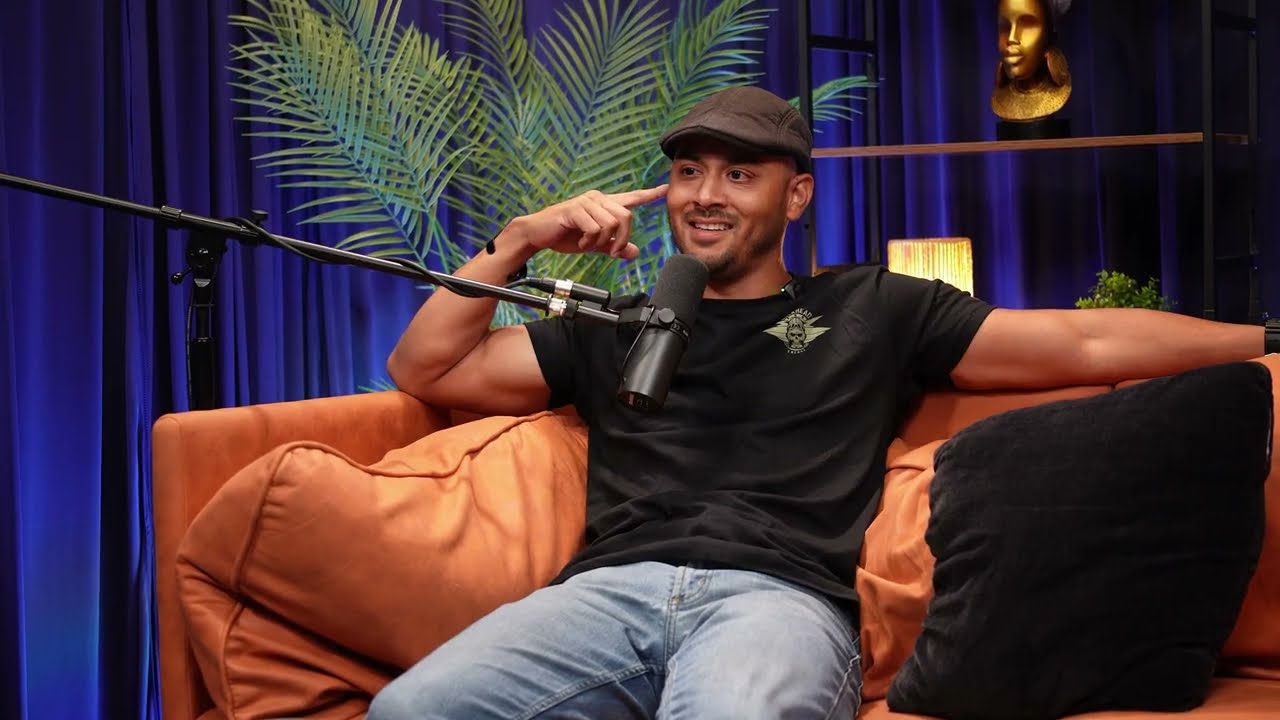
From Would You Turn Down Special Forces Selection for Her? He Did. / Daniel Coffeen US Army
The packing list showed up before the explanation did.
Daniel Coffeen, a U.S. Army Veteran and Medical Service Corps officer, was a second lieutenant in Hawaii, running a live fire exercise for an aviation support battalion, when the phone rang. He had just been honor graduate at a two-week course for new lieutenants. Nobody had mentioned that it doubled as the pre-Ranger course, or that the honor graduate got an automatic slot.
“So, you need to show up to Fort Benning, Georgia in 5 days, and here’s the packing list.”
He says he did not recognize half of what was on it.
Everybody has a friend who almost went to selection. In interviews filmed by Vegas Veteran Voices, a Las Vegas nonprofit, eight Veterans who actually went told us what the Army’s and Marine Corps’ hard schools were like. Their accounts run from 1996 to the late 2000s, and these courses change, so read each as a postcard from its year. What does not seem to change: almost nobody knew what they were signing up for, and the school was rarely testing the thing they had trained for.
Ranger School: 61 days, five days’ notice
The Army calls Ranger School “one of the toughest training experiences in the Army” and lists it at 61 days: a first phase of preparation, three weeks in the mountains, then the swamps.
Coffeen arrived as a medical officer. He had not been to infantry school. By his own account he barely knew the machine guns he was about to be graded on.
“I’m at Ranger School, and I don’t know anyone, and I don’t know anything.”
So he made himself useful instead. He filled other people’s canteens. He traded away the peanut butter out of his MRE.
“I’d take people’s fire guard shifts. And I just tried to be the most helpful person I could be throughout that entire process.”
He went straight through without repeating a phase, which by his memory only four of about 150 managed. His number, not the Army’s. Asked whether it was grit or the favors, he did not hesitate.
“When you’re in Ranger school you don’t get your tab, your Ranger buddies get your tab for you.”
Then he reported back to his unit to be congratulated.
“I come back to my unit and my unit’s like, ‘Hey, great job. You don’t work here anymore. You’re in the infantry.’”
Fired for passing.
Recon selection: 200 in line, two at the end
Jason Lee Morrison, a Marine Corps Veteran and Recon Marine, was at the School of Infantry in the mid-1990s, a guaranteed infantryman with a plan to get to the Naval Academy, when the recruiting pitch walked in wearing sunglasses.
“They’re all jacked and they had jump wings and dive bubble on.”
Sleeves rolled wrong, out of regulations. They were holding a selection. Morrison sat and watched the line.
“There’s like 200 people lined up to sign the paper and finally I was the last guy.”
“I passed the indoc, me and like four other people passed out of that. And then out of that, I think only two of us actually made it into recon.”
He stayed in recon and force recon units for seven and a half years and never did get to Annapolis. His summary of the job: a sniper works from a few hundred meters out, and recon is sitting in somebody’s attic.
Edward Haines, a retired Marine Master Sergeant who worked in signals intelligence and Radio Recon, got the question from his new unit in Hawaii: did he want to try out for Radio Recon? His reasoning was airtight.
“I have no idea what that means, but I’m gonna go just because it sounds sexy.”
Also, the instructors he liked least were against it. He had spent his mornings at a Navy pool in Pensacola, where the lifeguards taught two Marines a proper breaststroke and let them do it in uniform.
“I knew how to swim but I had to learn how to swim better.”
He took his selection on Friday, December 13, 1996, passed, and went on to the reconnaissance course, Airborne and SERE. We asked whether he showed up on Friday the 13th in a hockey mask. He had considered the question.
“Kind of figured showing up and just doing what I was told was probably the best option.”
Which is, you will notice, the Coffeen method.
Special Forces selection and the Q Course: what they are looking for
The Army describes Special Forces Assessment and Selection as “a 24-day test of physical and mental stamina” and the Qualification Course that follows as 53 weeks, ending in a staged invasion of a made-up country called Pineland. Those are today’s figures. The men below went years ago.
Nobody we talked to went because of a brochure. Nick Merrick, a former U.S. Army Green Beret and founder of Green Beret Racing, was an infantryman at a training rotation, wearing every pound of gear the Army had issued him, when he noticed some Special Forces soldiers lying out getting a tan.
“I said that seems a little bit cooler. I want to do that.”
“Came back from a 16-month deployment, went to selection and never went back.”
He started the Q Course in 2007 and graduated in 2009.
Dean Goble Jr., a retired Army Green Beret, saw his first Special Forces team in Iraq, when a black SUV pulled up at a bad scene and men in unfamiliar kit handed him a smoke grenade. Back home he went looking for their recruiter.
“I didn’t know exactly what it was. I just knew that it sounded like something cool, and that was literally enough for me.”
That makes four people in this article who went because somebody looked cool. Goble passed on his first try, and he is firm that it was not because he was the best one there.
“I was never your honor grad of stuff, but I was never on the bottom. I was just your Mr. Consistent.”
Now people headed to selection ask him for advice, and what he tells them is about who the school is built to screen out.
“Very egotistic, all about me, they’re not looking for that.”
He saw the screen work. Later in his career he walked along with a student team during Robin Sage, the course’s final exercise. After a movement of twelve or fifteen miles the whole team dropped by the side of the trail, hurting, and the team’s medic dropped with them.
“Hey, you’re the medic. You don’t get to sit down.”
Goble says he watched it click. At every halt after that, the kid was up checking on the others. Goble never learned his name.
Robin Sage: the view from the fake country
Pineland is real enough to have a population. An Army release from 2013 says the exercise’s “notional country” covers 15 North Carolina counties, with civilian volunteers and about 200 service members from Fort Bragg playing locals, guerrillas and opposition.
One of those soldiers, on his turn, was “Cheeks” Aguillon, a U.S. Army Veteran and former chaplain assistant who now serves on the Vegas Veteran Voices board. He played a guerrilla, with a Russian accent he admits was not good. His trainees had parachuted in, been ambushed in a river and run about six miles to camp. The guerrillas had prepared a welcome.
“We designated little parts of the camp as sacred holy sites but we didn’t tell them about it.”
An exhausted candidate would lean on the wrong tree and the whole camp would lose its mind. The point, as Aguillon explains it, is that these teams have to earn the locals’ trust and turn them into a fighting unit, which is hard to do while desecrating their tree. He stopped the story where the school would want it stopped: he is “pretty sure people at Robin Sage would like me to not totally detail how that goes.”
Airborne School: three weeks, five jumps, one tooth
Airborne is the school most of these people share. The Army says the course at Fort Benning is three weeks and five jumps, and that it takes students from every branch.
Aguillon wanted it badly enough to raise his hand the day two airborne chaplain assistants drove down from Fort Bragg with a parachute and let his class try it on. It is a school you have to volunteer for.
Anisa Palmer, an Iraq combat Veteran of the 82nd Airborne, got to Fort Benning and promptly watched a Marine she liked break his leg on his first jump. She remembers thinking: what did I sign up for? Then came the part in the dark.
“That night jump, that was scary, especially the first one out of the door.”
Her own damage report is short.
“I think my worst injury was I broke a tooth.”
SERE: the one rule
SERE stands for Survival, Evasion, Resistance and Escape. It is the school people say the least about, and our guests kept it that way. Haines went through it and moved on to the next sentence.
Jason Brooks, a medically retired Marine who became a Recon and SERE instructor, taught it at a counterterrorism school after the Marine Corps and calls it his favorite thing to teach. He told us about a lighter version he ran for a television survival show, where his crew grabbed contestants, hooded them and drove them off. The briefing had one firm rule: if you are caught, stay with your team.
“If you try to run you’re going to get shot.”
Ten instructors with rifles came over a berm twenty yards away. Two contestants got up and ran. On television, you get to try again.
The slot he did not take
After Ranger School, Coffeen says he was on fire for the infantry. He built a packet for Special Forces selection, and the message came out with his name and a date on it.
He did not go. He was dating the woman he would marry, she was training in Texas, and selection would have wrecked the plan to be there together.
“One of my greatest regrets in life is I didn’t go to special forces selection. I went to San Antonio instead.”
He told himself he would go later. He did not. He says the Army stopped being fun the day he made that call. He is the one person here who can say what the hard school costs when you skip it.
What the schools were for
Morrison learned on arrival that the test had no last day.
“Every day is selection. Selection’s ongoing and continuous.”
The ruck runs of unknown distance, the night swims in fins: for years he assumed it was about learning the job. He no longer thinks so. Anyone can be taught a radio, he says.
“I thought the Marine Corps was teaching me about how to conduct war.”
“It was teaching me about myself. It was teaching me who I am.”
He knew it had worked on a day off.
“We were out deep sea fishing off the coast of San Diego and I’m looking at the shore. It’s like 15 miles away and it just occurred to me, how could anyone drown if they fell off the boat out here? You can see the shore.”
That is what the hard schools are really like, if these eight are any guide. You go because somebody looked cool in sunglasses. You get through by filling another man’s canteen. And years later you are on a boat fifteen miles out, honestly confused about how drowning works.
Where to go from here
No advice from us, and we are not recruiting for anybody.
- The Army's own pages on Ranger School and Special Forces What the Army says about its own courses, in its own words: Ranger School on the Rangers page, and Special Forces Assessment and Selection and the Qualification Course at goarmy.com/careers-and-jobs/specialty-careers/special-ops/special-forces.
- Military OneSource A Department of Defense service with a 24-hour phone line and chat for service members and families. Free, confidential, and separate from your chain of command. 800-342-9647.
- Nellis AFB Military and Family Readiness Center The information and referral center on Nellis Air Force Base, for active duty, Guard, Reserve, retirees and their families. 702-652-3327.
A listing is not an endorsement.
If you are a Veteran in crisis or having thoughts of suicide, call 988 and press 1, or text 838255. The Veterans Crisis Line is free and confidential, 24 hours a day.
Go hear them say it
Every quote above links to the second it was said. Start with Coffeen for Ranger School and Morrison for the boat. If you are in Southern Nevada, our list of posts, clubs and services is at Veteran resources in Las Vegas.
Stories quoted in this article
- Would You Turn Down Special Forces Selection for Her? He Did. / Daniel Coffeen US Army
- He Listened for 20 Years. Now He Tapes Ankles at a High School.
- This Marine Lost Everything… And Had To Start From Zero | Jason Lee Morrison
- This Shouldn’t Have Worked… But It Did
- How Black Rifle Coffee Company Serves Veterans After the Uniform Comes Off w/ Dean Goble
- Cheeks on Set: From Barracks to Behind the Camera
- Mom Died of Cancer at 5. She Built I Will Survive. | Anisa Palmer
- Why SERE Breaks People | Marine Recon Instructor Explains Survival Training