
Should I join the Guard after active duty?
Four Veterans who went from active duty to the Guard or Reserve, and two who started there, on the cushion, the regret and the paperwork.
By Vegas Veteran Voices,
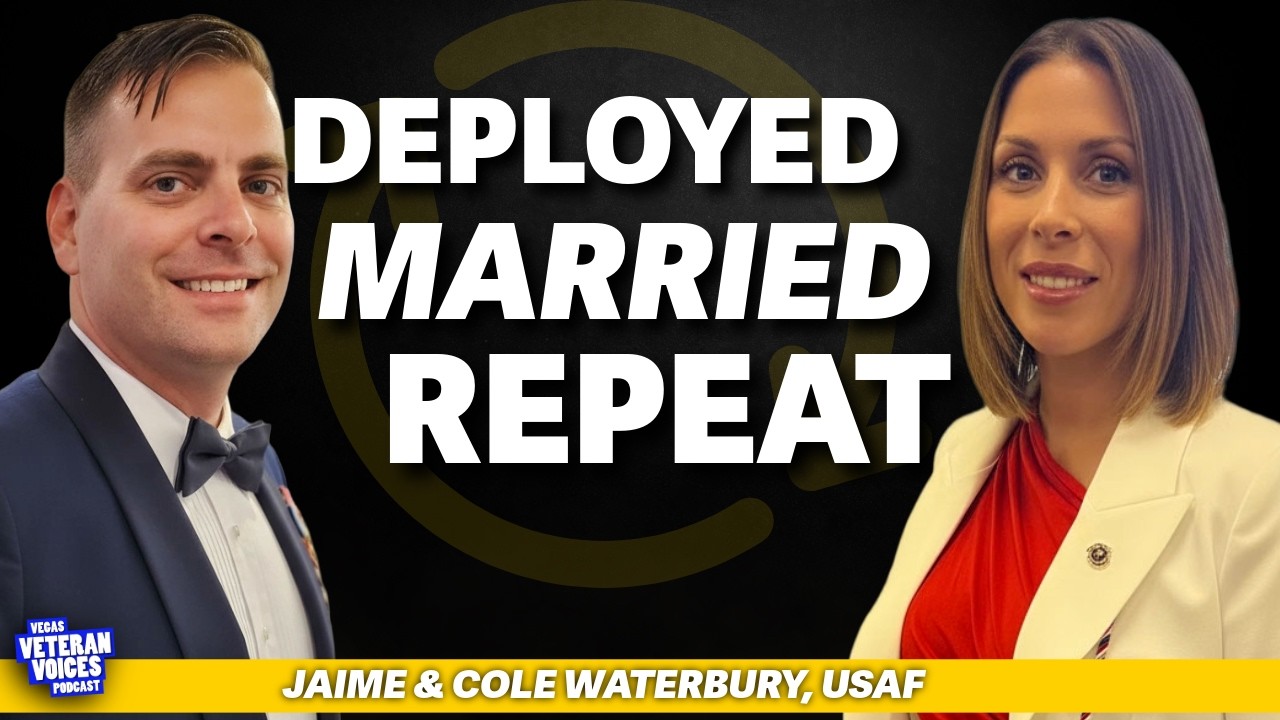
From Most Military Couples Fall Apart. Here's Why They Didn't.
The last day of active duty has a ritual. You out-process, you get your paper, and you stop being somebody’s problem. Then there is the other ritual, where somebody mentions that you do not have to stop at all.
We are not going to tell you what to do. We cannot, and we would not. What we have is a small group of Veterans on tape who went from active duty into the Guard or Reserve, or who started there, and what each of them said it was. There are four who made the jump and two who did it the other way around. We say so up front because that is a short list, and we would rather give you six honest voices than pad it to twelve.
The soft landing
Jamie Waterberry is a Veteran who works in corporate philanthropy and served in the Air Force. She went from active duty into a Reserve squadron, and she is the most direct about why.
“You see a lot of people that get off of active duty and completely shut out. There’s no more military anything, and that really affects their life.”
Her view is that the Reserve is a cushion. She says it gives you a little bit of room to work out where you want to go in life, instead of cutting the cord in one move.
The cushion has a cost, and she is blunt about it too. She and her husband Cole were both military. The day she out-processed, she says, he came home with news.
“I’m officially off of active duty. I already had an assignment with a reserve squadron in San Antonio.”
That next Monday, she says, he came home with orders, because once she was no longer on active duty, they were no longer both military and on the same footing. Within about a year they had moved again, to Germany.
The fleet guys end up in the Reserve
Not every one of them, but Michael D’Angelo, a Marine Corps Veteran, machine gunner and stand-up comic, says that is how his unit felt from the inside. He enlisted straight into the Reserve, and he noticed who started showing up.
“The reserves is infamous for guys on their way out. They get out, they become reservists.”
He says Marines who had served in the fleet began cycling through his unit, and that talking and training with them helped him with some of what he had been dealing with. They had been there. They told him he knew what he was doing.
That is the case for it, from a man who did not come at it from active duty. The other side of the room is people who came from the fleet and found the Reserve smaller and stranger than they expected. We have more of that in What is the Reserve or National Guard really like?
The ones who wish they had stayed, or think about going back
Bruce Cardenas, a Marine Corps Veteran who went on to the LAPD, did four years of active duty and then seven or eight in the Reserve. He says the Reserve part was good.
“And the reserve thing was great.”
Then the weekends kept coming, he says, and he had kids and a young family, and he did not stay. He does not hide that it is one of his regrets. He also says this:
“The Marine Corps was the best thing I ever did. It really set my life.”
Notice that the regret is about leaving the Reserve, not about joining it.
Clayton, an Air Force Veteran and the founder of Red Tails Racing, has the opposite problem. He went from active duty to the Air National Guard through a program he calls Palace Chase, to finish his degree. He puts the verdict plainly.
“I should have just stayed active duty and said, you know, screw it to being an officer.”
He says paperwork between two different personnel commands left him stuck at a rank he should have moved past, and that his animosity toward the Air National Guard built over the years. He says the leaders he found there were not leading.
“When I got to the guard, my leaders stopped leading from the front.”
Our reading is that his complaint is the paperwork and the leaders, not the idea of the Guard. Clayton’s story is about one bad assignment, not a verdict. If you want to know how Reserve and Guard service is counted, the Department of Defense explains it on its Reserve retirement page, which describes retirement as built on a points system. We are pointing to the page, not telling you what to do.
Nate Rosas, a U.S. Army Veteran who served in Afghanistan with the 101st Airborne, also made the jump. His interview is among our oldest, filmed before we were a nonprofit, so take it as a supporting voice. He came home and joined the Illinois Guard, and he served nine years in all, active and Guard together. Asked whether he would do it again:
“Better or worse, I would do it exactly the same.”
And he says that, to this day, he thinks about going back in some form, Guard, Reserve or active, because what you miss, for a lot of people, is the people.
The ones who started there
Lucky Lopez, an Army National Guard Veteran, a mechanic and a car business YouTuber, picked the Guard on purpose in the first place.
“I didn’t know if I wanted to commit full-time to the Army or just do the National Guard.”
He says he thought he could do the Guard and then try for warrant officer. What he got was a base unit where, in his words, nothing ever broke, so there was nothing to fix.
So should you?
We do not know. That is the honest answer, and it is also the honest pattern.
Waterberry says look into it, and her reason is the cushion. Cardenas says the part he regrets is leaving. Rosas says he would do all of it again and still thinks about going back. Clayton says he should have stayed on active duty, and his reason is a paperwork failure and a rank he never got. Lopez chose the Guard and found it quiet.
Notice what is missing. Nobody blames the idea of the Guard. Clayton blames one program and one stack of paperwork, and the others regret how it was run or that they stopped. That is six people, and it would be easy to over-read. That is all we can honestly say from the tape.
Where to go from here
No advice from us. These are places that exist, what each one does and how to reach it.
- Military OneSource A Department of Defense service with a 24-hour phone line and chat offering counseling, coaching and practical help with military life. 800-342-9647.
- Nellis AFB Military and Family Readiness Center The Nellis Air Force Base information and referral center. It serves active duty members, Guard, Reserve, retirees, DoD civilians and their families. Call first about eligibility and base access. 702-652-3327.
- Nevada Department of Veterans Services (Las Vegas office) The state agency for Veterans. It connects Nevada Veterans and families to education, housing, employment and health care benefits, and its accredited Veterans Service Officers help with VA claims at no cost. 702-486-3830.
A listing is not an endorsement.
Related questions
If you are a Veteran in crisis or having thoughts of suicide, call 988 and press 1, or text 838255. The Veterans Crisis Line is free and confidential, 24 hours a day.
Go hear them say it
Every quote above links to the second it was said. If you are in Southern Nevada, our list of posts, clubs and teams is at Veteran resources in Las Vegas.
Stories quoted in this article
- Most Military Couples Fall Apart. Here's Why They Didn't.
- Why Do Marines Treat Dark Humor Like Therapy? Michael D’Angelo USMC 0331
- Get Out Of Your Own Way | Bruce Cardenas, USMC + LAPD
- PTSD Adrenaline Therapy for Veterans in Race Cars | Snap Oversteer Explained | Red Tails Racing
- He Joined the National Guard to Work on Vehicles | Lucky Lopez
- How Hockey Is Giving Veterans a Second Chapter / Really OK Hockey / Las Vegas Warriors @ Able Baker (recorded before Vegas Veteran Voices became a nonprofit)