
How do Veterans find a job in Las Vegas?
Everybody warned them: in Las Vegas you have to know somebody. Ten Veterans on who they knew, who they did not, and what they did about it.
By Vegas Veteran Voices,
From Most Military Couples Fall Apart. Here's Why They Didn't.
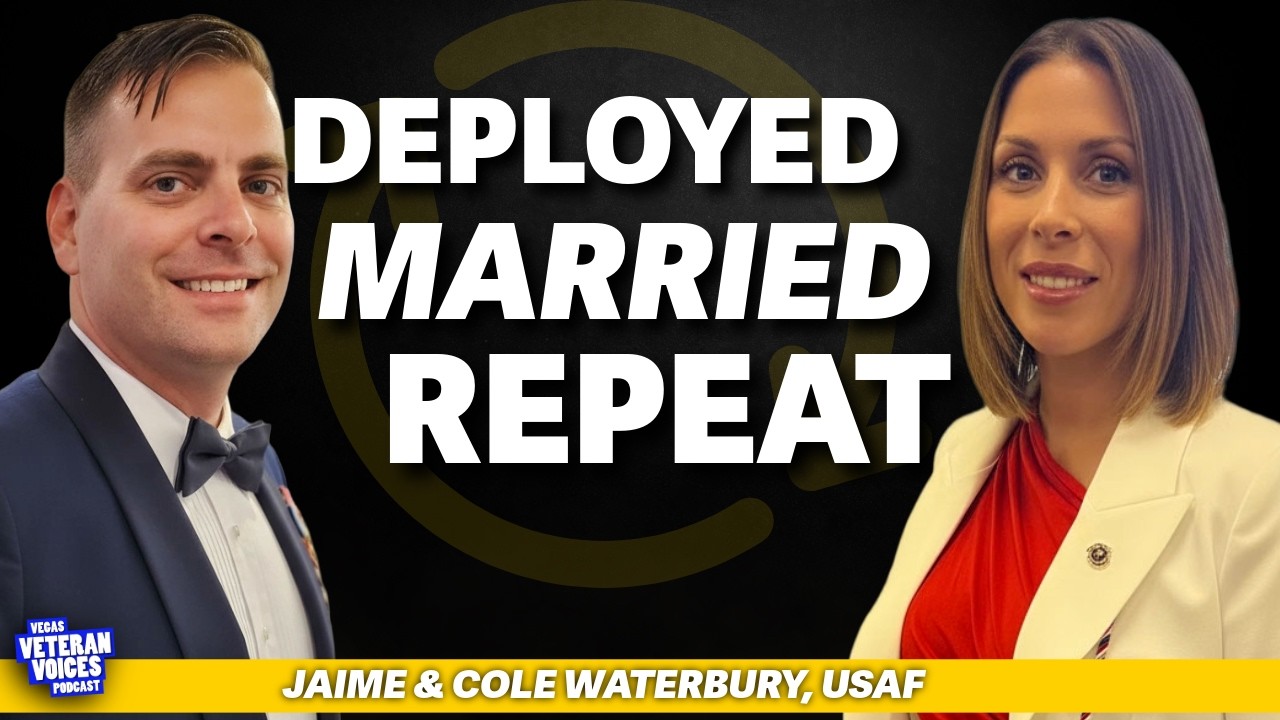
Before Jamie Waterberry’s family moved to Las Vegas, she heard the warning everybody hears. She did something about it before she unpacked.
“I did that specifically because I had heard that Las Vegas really got to know somebody to get a job, that the job market was very difficult. So using my GI bill, I strategically went to UNLV and sought out opportunities that would help me build that career.”
Waterberry is a Veteran who works in corporate philanthropy. Notice what she did with the warning. She did not take it as bad news. She took it as an instruction: if the city runs on people, go where the people are.
That is this article’s argument, and our guests were split on how much of it is true. In interviews filmed by Vegas Veteran Voices, a Las Vegas nonprofit, ten Veterans described how work found them here, or how they found it. Some describe who they knew. Some describe showing up. They are not as far apart as they sound.
The warning, and the walk-up
Waterberry went to UNLV partly for the degree and, by her own account, partly for the connections. At a university event she saw what a philanthropic consulting group did, and she asked the head of it if she took undergraduate interns.
“I approached the CEO and asked, ‘Hey, do you by any chance offer undergraduate interns?’ and she said, ‘No, we don’t.’”
The woman talked to her for a few minutes anyway, told her to send a resume, and that was that.
“Walked myself into an internship when somebody didn’t even offer it.”
She ended up as an intern and project manager at the same time, and consulted on a new nonprofit tied to the American Music Awards. A job that did not exist. A person who said no, and kept talking.
Erik Schreiner would recognize that move. Schreiner, a Marine Corps Veteran who works at Adrenaline Mountain, an off-road park outside the city, saw a listing for a tour guide and did not send a resume. He walked in and told them he was the guy. We told that story in what jobs Veterans actually get, so we will leave it there.
The school that does the introducing
Waterberry is not the only one who found the door through a campus. Ross D. Bryant is a U.S. Army Veteran who leads UNLV Military and Veteran Services. He says what his office is most proud of is on a wall.
“To see 5,000 names on the wall here of people who have graduated to go get future jobs, that is just hugely rewarding for me.”
He also says the school’s reach goes up the chain, and he means it literally.
“We have rebel vets that work for our senators in Washington and here.”
And on what a Veteran gets on arrival, he says:
“You walk in here, you’re just instantly connected, not just with us, but all of the entities in this community, so that we can help you transition to figure out what you’re doing next.”
That is one man’s description of his own office, so weigh it that way. UNLV’s own page lists an annual Veteran Career Fair among the center’s services.
The ones who built their own door
Not everybody was hired by somebody. Lucky Lopez, an Army National Guard Veteran, mechanic and car business YouTuber, was born and raised here. He opened a repair shop and then a dealership. He is also not sentimental about the town.
“I love Vegas, but I’m sure you guys know it’s it’s a fickle town.”
He says the funny commercials he ran for his dealership are what got him into social media.
“That’s kind of what got me into social media is I was doing these funny commercials.”
Edward Haines, a retired Marine Master Sergeant and athletic trainer, grew up here and describes the local default job market from the inside.
“If you stay on the strip, I mean, you’ll make decent money. You’ll you’ll survive. You’ll you’ll do fine enough. You just never will leave.”
He went another way. He went back to school for athletic training at UNLV, and he is now assigned to a high school through his employer.
The ones who moved here for work
Some people are not new at all. They came for a job. Jacob “Stitch” Duran, a U.S. Air Force Veteran and legendary cutman, worked for a tobacco company in California, promoted fights on the side, and wanted to move to Las Vegas.
“Wanted to move to Vegas to follow my dreams and put in for a job transfer and I waited and waited and finally they called me and said, ‘Look, man, there’s an opening in Vegas, but you got to be there in a week.’”
He sold his house in two weeks and drove his family nine hours. The work he really came for found him later, in a gym, from a man who knew his work.
“He asked me for my card and the next day he called and said, ‘Look, man, you know, we just bought the UFC.’”
Duran had a transfer and a reputation. He needed both.
Sarah, an Army Reserve staff sergeant and medic who co-owns a restaurant here, says she did not need anyone to introduce her. She helped a friend move here and agreed to stay if she found a job in two weeks. She had been working in bars and restaurants since she was 15.
“I genuinely looked and I found a job literally within a week.”
Hospitality, in her case, which may be a different market from the one Waterberry was warned about. Both can be true.
Someone has to know you exist
Evelyn Pacheco, a U.S. Army Veteran and Nevada’s first Black female union plumber, runs Nevada Women in Trades. Her complaint is not that people cannot get work. It is that nobody told them where to look.
“I’m still receiving phone calls saying, ‘Well, I didn’t know you were here.’”
She says that after seven years. Some of the people who call say they already paid for another program and still cannot find a job. That is the other half of “you have to know somebody.” Some of the people who could help are right here, and the Veteran does not know they are.
Ureal Irving, a U.S. Army Veteran and founder of Envision Footwear, met the host through a Las Vegas Veteran nonprofit, and talks about how the city treats people who arrive alone.
“This city will eat you up and shoot you out faster than you know what is going on.”
Juan Valdez, a Marine Corps Veteran and Purple Heart recipient who works with Wounded Warrior Project, lives in the city, and describes his own job search as a search for the right kind of place.
“I realized as time progressed, the happiest moments of my life is after the Marine Corps is when I was working for a nonprofit or when I was volunteering for a nonprofit.”
He says his organization runs a program that helps wounded Veterans with resumes, interviews and job search.
“You need a job, you got to feed your family, you got to feed yourself. So, we have a warriors to work program to help you review your resume, get prepared for your interview, find a job, right?”
What they have in common
Count the doors. A university event. A campus office. A walk-in. A job transfer. A gym. A restaurant that was hiring. A union. A program. Every one of them is a person or a place that connects to a person.
Waterberry’s warning, in these stories, held up: somebody always knew somebody. What our guests show is how they got to know somebody. They went to places where people were: a school, a gym, a restaurant, a job site.
Lopez’s line sits behind all of it, a fickle town. The stories above are what people did about that.
For the same city from another side, see what it is like to be a Veteran in Las Vegas.
Where to go from here
No advice from us. These are places that exist, what each one does and how to reach it.
- Veterans Career Employment Team (Nevada DETR) A state employment program. Career coaches help Veterans and eligible spouses with career planning, resumes, interview preparation and job search, in person at EmployNV Career Hubs or online.
- UNLV Military and Veteran Services Center The UNLV office that gives student Veterans academic, social and administrative support and helps them use their education benefits. Its own page lists an annual Veteran Career Fair. 702-895-2290.
- North Las Vegas Veterans and Community Resource Center A City of North Las Vegas walk-in center where staff meet one-on-one with Veterans and families and connect them, mostly through partner agencies, to help with employment, housing, education, mental health, finances and legal matters. (702) 633-1640.
- Nevada Veterans Business Outreach Center A business outreach center that supports Veteran entrepreneurs in Nevada and runs Boots to Business training, with resources for military spouses.
- Department of Labor, Veterans' Employment and Training Service: find a job The federal starting page for Veterans looking for work. It points to nearly 2,400 American Job Centers around the country, apprenticeships and federal hiring guidance.
A listing is not an endorsement.
Related questions
If you are a Veteran in crisis or having thoughts of suicide, call 988 and press 1, or text 838255. The Veterans Crisis Line is free and confidential, 24 hours a day.
Go hear them say it
Every quote above links to the second it was said. Start with Waterberry. Our full list of employment and education help in Southern Nevada is at Veteran resources in Las Vegas.
Stories quoted in this article
- Most Military Couples Fall Apart. Here's Why They Didn't.
- He Joined the National Guard to Work on Vehicles | Lucky Lopez
- Breaking Barriers: Evelyn Pacheco (ARMY VET) on Becoming Nevada’s First Black Female Union Plumber
- What Veterans Call an “Alive Day” at Adrenaline Mountain
- Before Mike Tyson & Creed, There Was Vietnam | Jacob "Stitch" Duran, Legendary Cutman, USAF Veteran
- He Listened for 20 Years. Now He Tapes Ankles at a High School.
- Most Veterans Don’t Know Their Education Benefits, The Man Who’s Helped 9,000 Claim Them
- From Iraq to Iconic: The Wild Story Behind Envision Footwear (recorded before Vegas Veteran Voices became a nonprofit)
- Wounded Warrior Project: From Afghanistan to Finding Purpose with Juan Valdez
- Vegas Brunch Just Got EFFIN Crazy - Meet The Woman Behind The Yolk (recorded before Vegas Veteran Voices became a nonprofit)